“Let’s get a breath of fresh air”.
A sentence one comes across as an expression of being stifled by the day-to-day routine of life. In the rush of work and household chores one seems to have stopped breathing! Hence the exclamation! Let’s dive into some breathing exercises for beginners….
Have you ever wondered where oxygen is in abundance, why suddenly feel the necessity of “a breath of fresh air”?
Maybe we aren’t taking in enough of it. Maybe we aren’t using our breathing apparatus to its maximum. Maybe we are taking it for granted. That too in a country where sages had thousands of years ago, developed methods to ensure that our bodies take in enough oxygen to sustain our health and psyche.
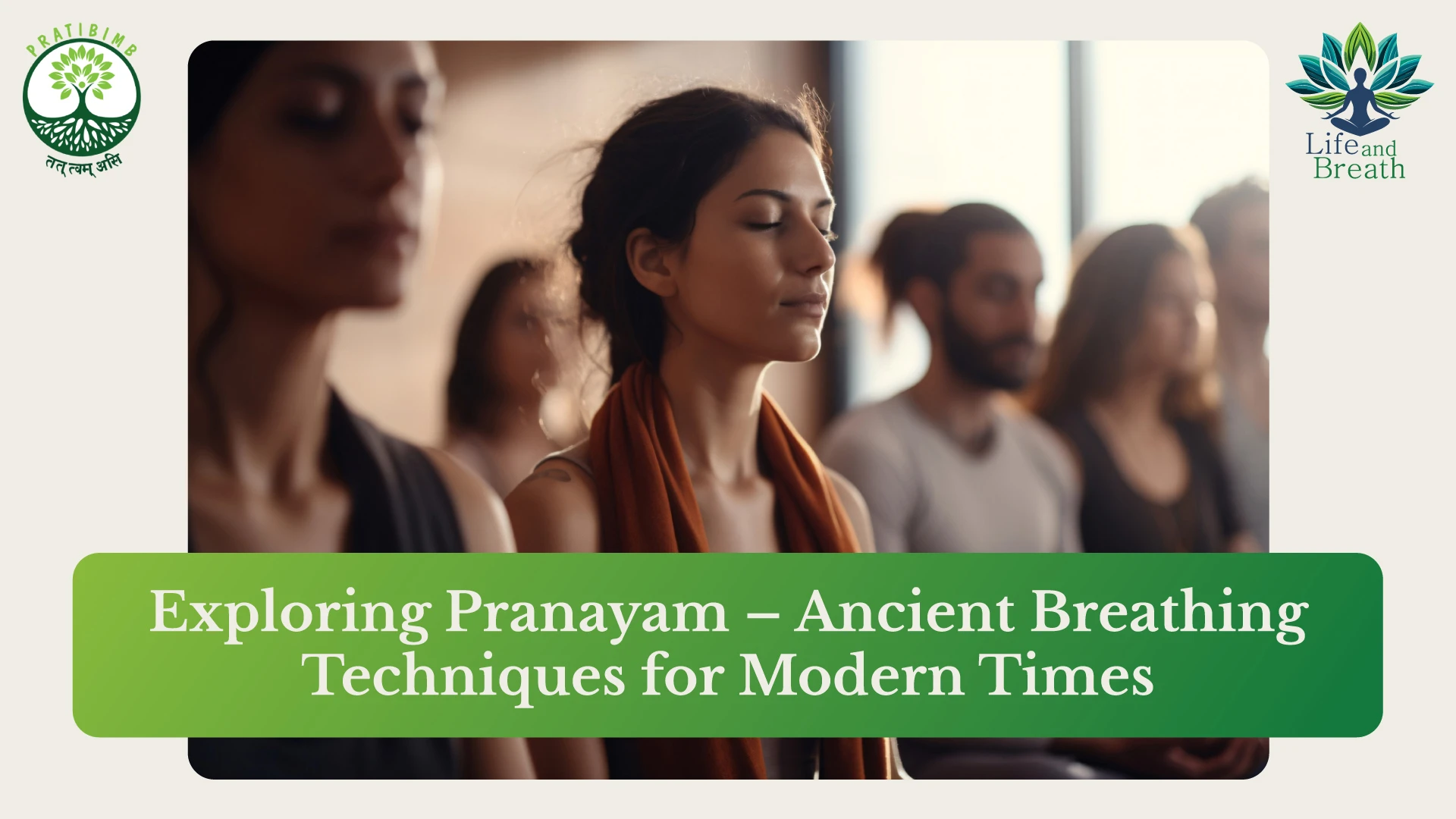
One of the methods is Pranayam. This is a breathwork meditation technique. A technique by which one can inhale oxygen to the body’s fullest capacity and also empty out the carbon-di-oxide collected in the lungs completely. As much as adequate inhalation is necessary, complete exhalation of the air in the lungs is also of prime importance. This is because if you inhale air into the lungs which still have CO2 in them. Then the incumbent fresh air will be diluted and contaminated and the impurities will be recirculated in the blood.
Over thousands of years various Pranayam breathing techniques have been developed by sages and rishis.
The Pranayam technique adopted by Pratibimb’s “Breathe” is an ancient technique developed by Guru Padmasambhava of our ancient Nalanda University. Guru Padmasambhava had compiled detailed teachings on how life is to be led in the most healthy way.
One night, he had a divine revelation that Nalanda would soon be destroyed, and he was urged to move to Tibet with his teachings.
Sure enough, Bhaktiar Khilji, an invader, destroyed Nalanda University and left its libraries burning for six months.
Some hundred years later, an Engineer from England was drawn towards the East. He had a job in Singapore, where he met a few monks who were capable of walking on burning coal. He then found out from where they had acquired this knowledge and capability. He then set out in search of this place which, incidentally, was Tibet. With great difficulty he reached there and the rest is history. He was accepted there as a long-lost Lama!
After spending years over there, learning the teachings, he went back to England and from thereon to the US, California, where he established an Institute of Mental Physics. Students of Mental Physics eventually brought back this knowledge to India, and we are fortunate enough to have an access to it through Pratibimb;s “Breathe”
Now there are nineteen to a dozen techniques and names of Pranayam like Anolom Vilom etc.
However, in “Breathe” we are first taught to empty our lungs completely, with a vociferous exhalation which sounds like a pressure cooker whistle.
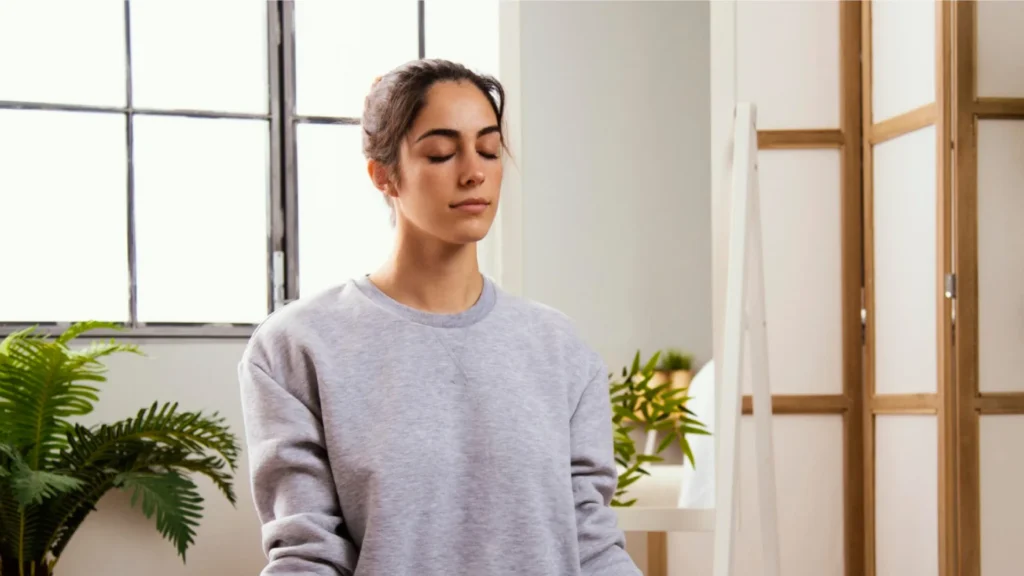
Then with the thumb of the right hand on the right nostril, we have to inhale from the left nostril. Then hold the left nostril with the ring finger of the right hand and exhale from the right nostril. The basic counts to be followed are 2 for inhalation, 8 for holding the breath and 4 for exhalation (1:4:2). One can increase the base count as one gets more and more proficient in it. The more you increase the count, your capacity to take in oxygen increases.
Finally there’s a lot of scope to explore the genres of Pranayam, but the technique offered by “Breathe” gives maximum satisfaction!!!!
.
Frequently Asked Questions
Breathwork meditation is a mindful practice that focuses on controlled breathing to enhance physical, mental, and emotional well-being. It reduces stress, improves focus, and helps restore inner calm.
Yes, breathing exercises for beginners such as full exhalation, diaphragmatic breathing, and guided pranayam sequences help in increasing lung capacity and improving overall respiratory health.
Breathwork meditation focuses on conscious awareness of the breath to achieve relaxation and mental clarity, while ranayam breathing techniques combine structured inhalation, exhalation, and breath-holding to purify the body and energize the mind.
Yes, many online programs like Pratibimb’s “Breathe” offer guided sessions on breathwork meditation and pranayam breathing techniques. These structured courses make it easy for beginners to learn effective breathing practices from home.