We often forget that our problems are not who we are. We identify so deeply with our struggles that they begin to define us. We say, “I am sad,” “I am hurt,” “I am jealous,” — as if the emotion and the experiencer were one and the same.
But the truth is, you are not your problem; you are the person who feels the discomfort caused by it.
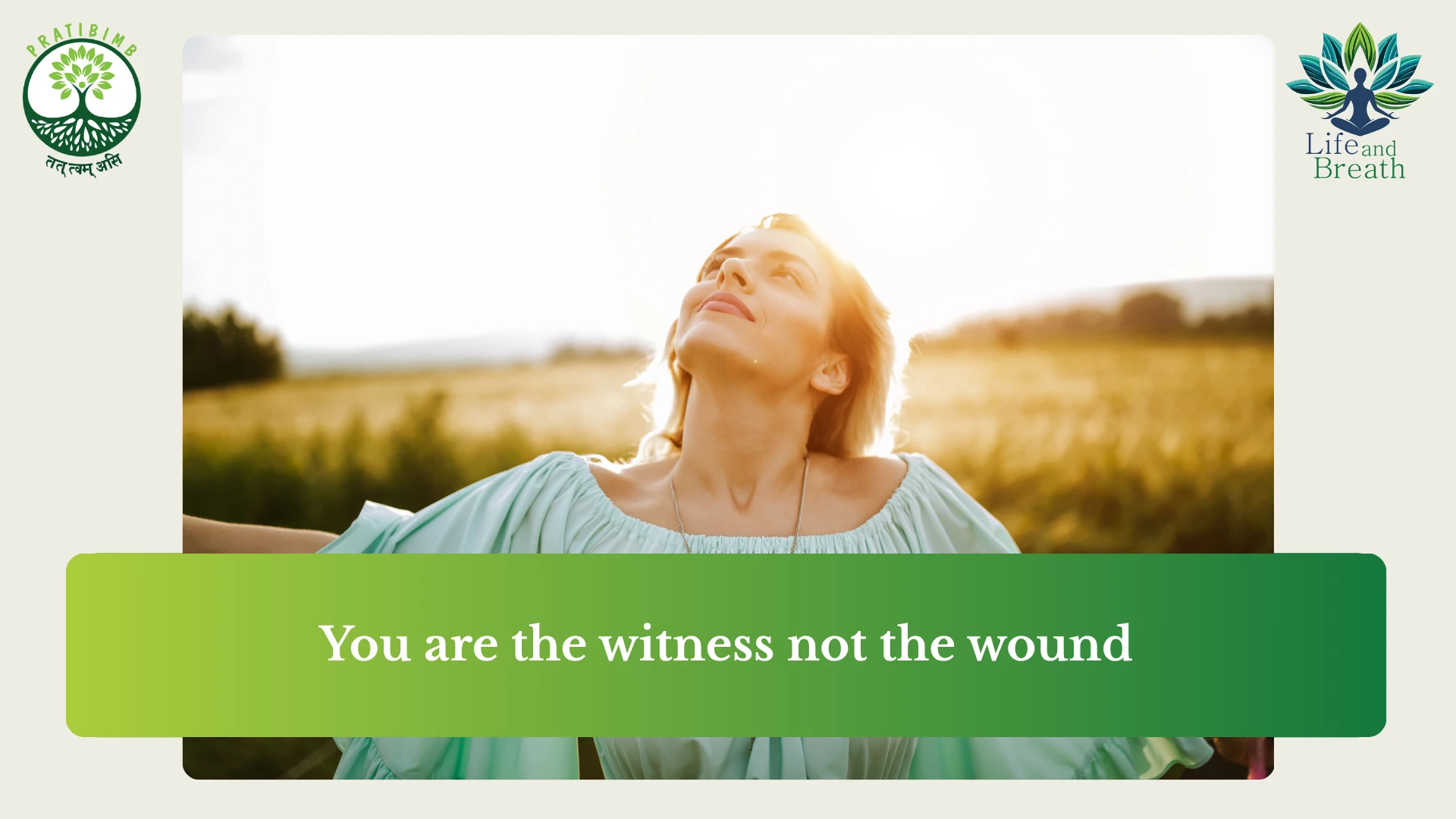
You are the witness, not the wound.
1. The Trap of Identification
When life challenges us, we confuse our temporary emotions with our permanent identity. We start to become what we feel. But emotions, like waves, rise and fall — and the ocean beneath remains untouched.
You are not sadness; you feel sad.
You are not hurt; you feel hurt.
You are not jealous; you feel jealous.
This subtle shift in language changes everything. It reminds us that our emotions are experiences passing through us, not definitions of who we are.
2. The First Step: Right Understanding
In the Noble Eightfold Path, the very first step is Right Understanding. Right understanding means seeing reality as it truly is, not through the fog of illusion. And the highest understanding is this:
You are divine consciousness — God in human form.
If we are divine in essence, how can we truly be jealous, hurt, or sad? These are fluctuations in the field of our human experience, not our eternal truth. When this truth sinks in, we automatically create a small but powerful distance between
ourselves and our problems.
And just that little gap gives us the courage and space to heal.
3. The Silent Watcher Within
Deep within us is a still, silent awareness — the witness consciousness. This witness is never touched by the drama of our lives. It remains calm even when the mind is in chaos.
You may cry, rage, or despair, but somewhere inside, there is a part of you simply watching — untouched, unbroken, and eternal.
Healing begins not by fixing the wound, but by realizing the distance between you and your story.
The moment you see that separation, your suffering begins to lose its grip.
This is the essence of how to detach from emotional pain through mindfulness — not by escaping feelings, but by observing them from the space of awareness.

4. From Reacting to Witnessing
When we forget our true nature, we react to everything.
Every word, every gesture, every memory becomes a spark for emotional fire. But when we shift from reacting to witnessing, we reclaim our power.
In witnessing, there is space.
In that space, there is peace.
And in peace, there is healing.
The moment you watch your anger instead of becoming it, it begins to dissolve. This is not suppression — it’s transformation. The light of awareness burns away the shadow of identification.
5. The Alchemy of Awareness
Mindfulness is not about emptying your mind; it’s about filling your awareness. Through consistent practice, we learn awareness techniques to overcome emotional suffering — breathing, observing sensations, noticing thoughts without judgment.
Each time you do this, the grip of the past loosens.
Your trauma starts to heal — not because you’ve rewritten the story, but because you’ve stopped believing you are the story.
This is the quiet alchemy of witness consciousness and healing from trauma. Pain transforms into wisdom when you stop fighting it and start witnessing it.
Closing Thought
You are not your past.
You are not your pain.
You are the awareness that has watched everything — silently, patiently, eternally.
So the next time you feel sadness or fear, don’t ask, “How do I fix this?” Ask instead, “Who is feeling this?”
And in that moment of witnessing, you’ll discover something sacred — the peace that was always there, waiting beneath the wound.
You are the witness, not the wound.
.
Frequently Asked Questions
Being the witness, not the wound, means observing your emotions without identifying with them. It’s about cultivating witness consciousness – realizing that you are the awareness behind every experience, not the pain itself.
Mindfulness for emotional healing allows you to observe thoughts and feelings without judgment. When you witness pain instead of reacting to it, you naturally begin healing from trauma through mindfulness and regaining emotional balance.
Simple awareness techniques include mindful breathing, body scanning, and labeling emotions. These practices help you detach from emotional pain and create inner space for peace and clarity.
Witness consciousness helps you see emotions as temporary experiences, not personal identity. This awareness deepens self-growth through silence and helps you live with greater inner freedom and understanding.
Yes. Through awareness techniques and meditation, you can gently observe past wounds without reliving them. Over time, this non-reactive observation transforms pain into wisdom and fosters lasting emotional healing.