How can breathing exercises provide anxiety relief instantly?
Breathing exercises provide anxiety relief instantly by manually overriding the autonomic nervous system. When anxiety triggers a fight-or-flight response, your heart rate rises and breathing becomes rapid. By consciously slowing your breath and focusing on deep, deliberate exhalations, you send immediate neurological signals to the brain that you are safe. This lowers the heart rate, reduces adrenaline flow, and relaxes tight muscles within minutes.
Understanding Anxiety: When the Mind Hijacks the Body
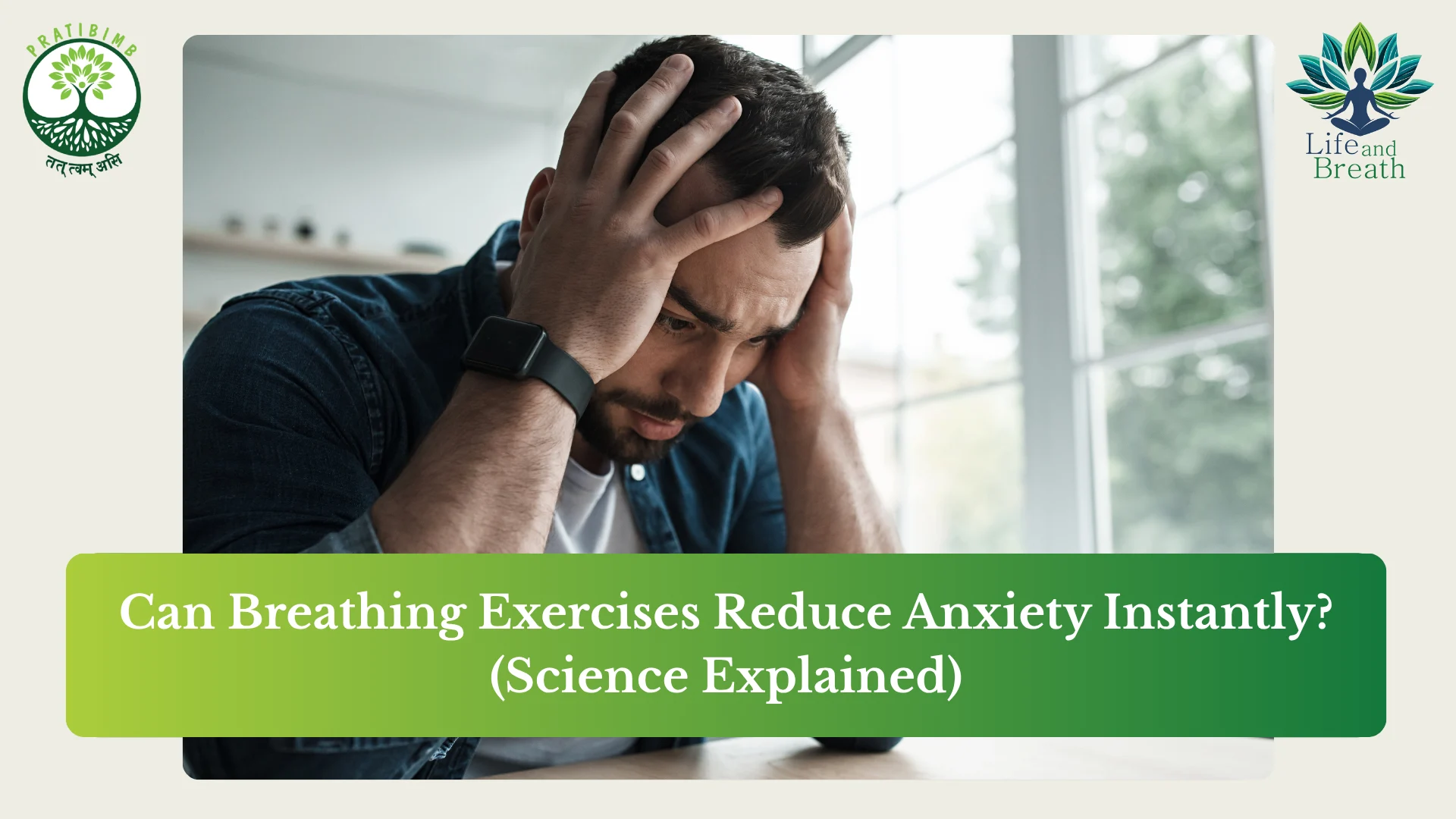
Anxiety is not just an emotional state; it is a profound physical experience. In our fast-paced modern world, racing thoughts often pull us out of the present moment. When you feel anxious or stressed, your body treats those mental worries as a physical threat, activating its primal survival mechanics.
During an anxiety episode, several physical shifts happen simultaneously:
- The Heart Rate Increases: Your heart pumps faster to distribute blood to your limbs.
- Muscles Tighten: Your shoulders hunch, your jaw clenches, and your chest restricts.
- Adrenaline Flow Increases: A surge of stress hormones floods your bloodstream.
- Breathing Becomes Fast and Shallow: You begin breathing rapidly from your upper chest, which can lead to hyperventilation.
This physical cascade makes your mind feel even more out of control, creating a continuous loop of panic. To break this cycle, you need a physical tool that can step in and interrupt the feedback loop between the brain and the body. That tool is your breath.
Does deep breathing reduce anxiety scientifically?
Yes, deep breathing reduces anxiety scientifically by activating the parasympathetic nervous system, which acts as the body’s natural braking system for stress. When you inhale slowly, your lungs expand, and the oxygen you take in is appropriated by the blood. Concurrently, the vital life force, or prana energy, is appropriated directly by your nervous system. This biochemical shift instantly reduces cortisol production, lowers blood pressure, and tells the brain’s fear centers to halt the adrenaline surge.
The Physiology of the Slow Inhale
When you practice slow, conscious inhalation, you are not just taking in air; you are altering your blood chemistry. Shallow breathing keeps the body in a state of oxygen deprivation and carbon dioxide buildup, which signals panic to the brain.
Slowing down the inhalation allows for maximum gas exchange in the lungs, feeding your cells with highly oxygenated blood. As the nervous system absorbs this energy, it transitions out of emergency mode and returns to a baseline of recovery, healing, and calm.
The Best Breathing Technique for Panic Attacks
When a full-blown panic attack strikes, your rational mind temporarily goes offline. You cannot simply think yourself out of a panic attack. You must use a physical anchor. The best breathing technique for panic attacks is Controlled Breath Observation, combined with systemic physical relaxation.
Step-by-Step Controlled Observation Guide:
- Find a Stable Posture: Sit comfortably and upright. Allow your body to become physically still, as physical stillness is the prerequisite for mental quiet.
- Simply Observe: Do not force your breath initially. Turn your awareness entirely inward and simply watch your breath move in and out. As you become aware of your breathing, it naturally begins to slow down on its own.
- The Slow Inhale: Take a deep, gentle breath in through your nose, tracking the air as it fills your lungs and stabilizes your center.
- The Systemic Relaxing Exhale: As you exhale slowly, consciously allow the stress, tension, and anxiety to melt away. Relax your entire body systematically—from the very top of your head all the way down to the tips of your toes.
By focusing entirely on the raw physical sensation of the air entering and leaving your body, you redirect your mind away from catastrophic thoughts. Controlled breathing restores balance, quickly calms the physical body, and effectively interrupts the acute anxiety cycle before it spirals out of control.

The Human Body as a Spiritual Instrument
In the practice of the “Science of Life and Breath,” the human body is viewed not just as flesh and bone, but as a finely tuned spiritual instrument. The breath serves as the absolute connection—the physical bridge—between the mind and the body.
Excellent breathing supports excellent physical health, which in turn nurtures excellent mental well-being. When we treat the body as an instrument and utilize the breath to tune it, we unlock an inherent capacity for emotional healing and inner balance. Even a few minutes of conscious breathing can change your internal frequency, making you feel lighter, calmer, and more centered.
Clearing the Past: The Memory Developing Breath
Anxiety is rarely just about the present moment; it is often fueled by stored emotional residues, past conditioning, and old negative impressions. In the comprehensive course Life & Breath: A Science, practitioners are taught a structured sequence of Pranayam, 8 Breathing Exercises, and Meditation Techniques specifically designed to strengthen emotional stability and calm the mind.
The very first exercise taught in this lineage is The Memory Developing Breath. This specific practice plays a vital role in emotional recovery:
- Melting Past Negativity: It is designed to target and melt away the past negativity stored within your energetic system.
- Releasing Traumatic Residues: Through the targeted movement of breath, you release old mental clutter and emotional baggage.
- Reconnecting with Peace: By clearing out old impressions, you open up internal space, allowing you to reconnect deeply with the natural peace that already exists within you.
Rewiring Your Brain Through Regular Practice
While knowing how to use the breath during a crisis is important, the true transformation happens when you build a daily relationship with your breath. Regular practice of these techniques acts as an ongoing training program for your nervous system.
Moving from Prevention to Mastery
When you practice conscious breathing daily, your brain undergoes a learning process. It stops associating stressful external stimuli with immediate panic. Instead, it learns to associate stress with calm, steady breathing.
Over time, this regular conditioning changes your baseline state. You build an internal reservoir of calmness. Even if anxiety does arise occasionally due to life’s unpredictable circumstances, your body remembers its training, allowing you to regain your balance, calmness, and normalcy much faster.
Conclusion: You Are Safe
Anxiety tries to convince you that you are in danger, that you are scattered, and that you are helpless. But the ancient science of breath reminds you that you hold the control panel to your own nervous system right under your nose.
Every slow, conscious, and deliberate breath you take sends an undeniable message directly to your mind: “You are safe.”
By dedicating time to look after your breath wholeheartedly—both mentally and physically—you move away from a life of frantic emotional reaction and enter a life of calm, conscious response. Sit quietly, track your inhalation, soften your body on your exhalation, and let your breath carry you back to your center.
[Take control of your anxiety today. Explore the ‘Life & Breath’ course to learn the full sequence of 8 Breathing Exercises and Meditation Techniques for lasting inner stability.]