Most people think of posture as a problem of the back, neck, or shoulders. If the neck feels
stiff after a long day at work, we blame the laptop. If the upper back feels tight, we blame the
chair. If the shoulders feel heavy, we blame stress. But very few people realize that poor
posture does something far more silent and far more important: it changes the way we
breathe. The body may still be taking in air, but the quality of that breath slowly becomes
compromised. Over time, this can affect energy, focus, mood, calmness, and even the way we
experience our own body.
Why Breath Is More Than Just Air
Breathing is the most basic function of life, yet it is also one of the most ignored. We can go
days without food and hours without water, but only a few moments without breath. From the
first breath of a new born child to the final breath of life, our existence is carried by this
simple rhythm. The Life and Breath philosophy places great importance on this truth: breath
is not merely a mechanical act; it is deeply connected with physical health, mental balance,
and inner vitality. When the breath is free, deep, and natural, the body functions with greater
ease. When the breath becomes shallow, restricted, and unconscious, the body and mind
begin to lose that ease.
How Posture Affects Breathing
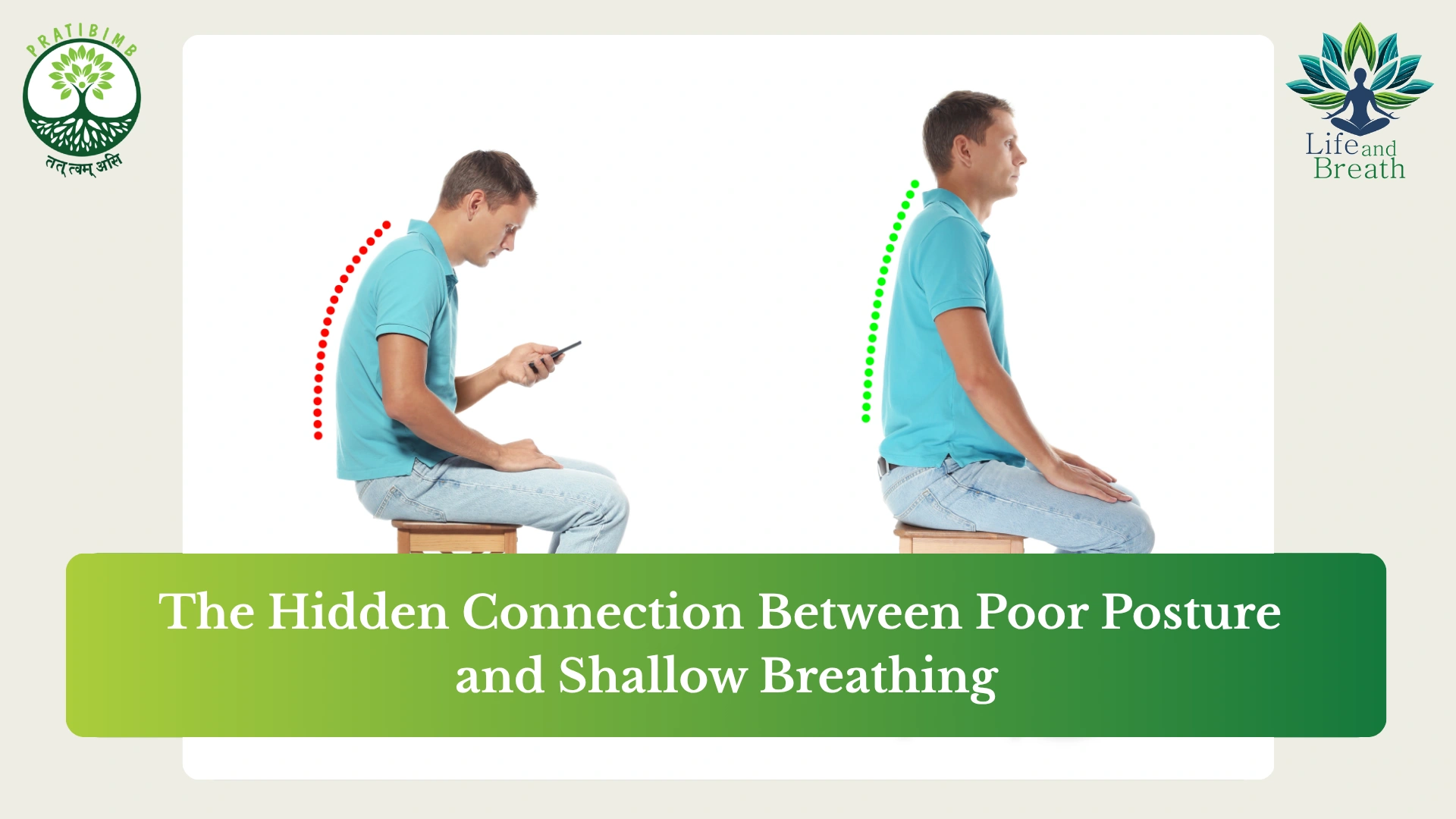
This is where posture becomes important. The way we sit, stand, walk, and work decides how
freely the lungs, ribs, diaphragm, and abdomen can move. A person sitting upright with the
spine, neck, and head comfortably aligned gives the breathing system space to function
properly. But a person sitting in a collapsed posture — head forward, shoulders rounded,
chest compressed, abdomen pressed inward — unknowingly reduces the space available for
full breathing. This is one of the clearest ways to understand how posture affects breathing.
The breath does not become shallow because the person has forgotten how to breathe; it
becomes shallow because the body is placed in a position where deep breathing becomes
difficult.
Try This Simple Posture and Breathing Test:
You can experience this immediately.
1. Sit upright for a moment.
2. Keep your feet steady on the floor, lengthen your spine, relax your shoulders, and
allow your chest to remain open without stiffness.
3. Now take a slow, comfortable breath.
The breath naturally feels easier. Now:
1. Slump forward, round your shoulders, let your head move ahead of your body, and
compress your chest.
2. Try taking the same breath again.
You will notice that the breath feels shorter, tighter, and less satisfying.
This small experiment proves what many people live with every day: shallow breathing caused by poor posture is not imaginary. It is a direct physical experience.
How Poor Posture Restricts the Diaphragm
The main breathing muscle of the body is the diaphragm. When we inhale properly, the
diaphragm moves downward, the ribs expand, and the lungs get space to fill more
completely. But when the body is folded forward for long hours, the diaphragm cannot move
freely. The ribs lose their natural mobility. The chest becomes tight. The abdomen cannot
expand properly. As a result, the body begins to rely more on upper-chest breathing. This
type of breathing is usually shorter, faster, and less calming. It may be enough for survival,
but it is not the kind of breathing that supports vitality, mental clarity, and deep relaxation.
Why Desk Workers Often Breathe Shallowly
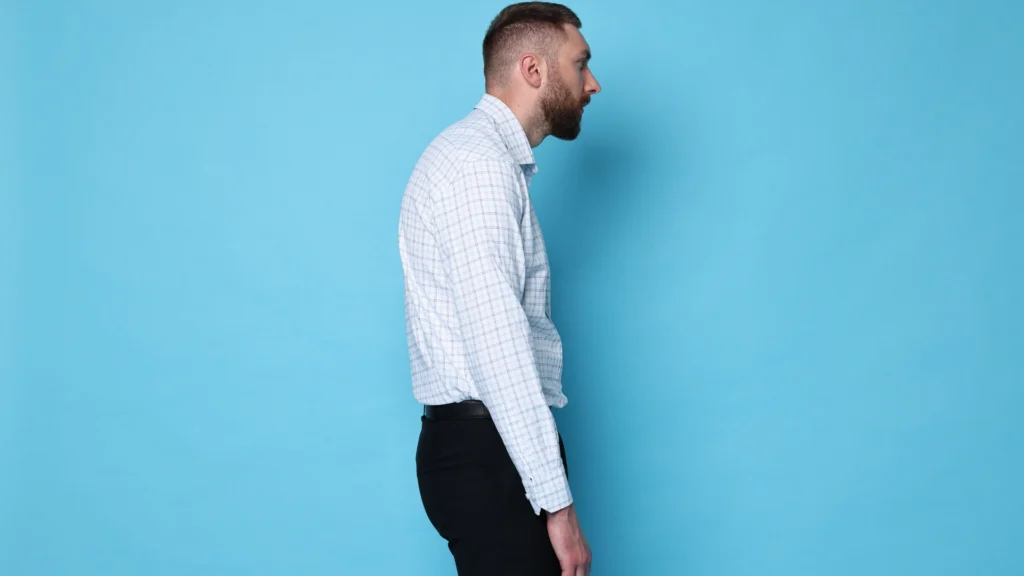
This is especially relevant for desk workers. Today, millions of people spend six, eight, or
even ten hours a day sitting in front of a computer. The body gradually adapts to the screen.
1. The head moves forward.
2. The shoulders round.
3. The upper back bends.
4. The chest becomes narrow.
5. The belly stays compressed.
6. The breath becomes small.
At first, nothing dramatic happens. There is no sudden warning. But slowly, the person begins
to feel tired even after sitting all day, mentally foggy even without heavy work, restless even
without clear stress, and stiff even without physical exertion.
The cause may not be only workload. It may also be the hidden cost of posture-driven
shallow breathing.
The real danger is that shallow breathing begins to feel normal. When a person breathes in a
restricted way for months or years, the body accepts it as the default setting. The person no
longer notices that the breath is incomplete. This is why awareness is the first step. Once you
become aware of your breath, you begin to notice how often you hold it, rush it, restrict it, or
breathe only through the upper chest. Awareness creates choice. And once there is choice,
correction becomes possible.
The Link Between Posture, Breath, and the Mind
There is also a deeper loop between posture, breath, and the mind. Poor posture restricts
breathing. Restricted breathing affects the nervous system. A disturbed nervous system
affects mental calmness, emotional balance, and focus. When the mind becomes tense, the
body collapses further. In this way, posture and breath keep influencing each other. A
slouched body often supports a shallow breath, and a shallow breath often supports a restless
mind. But the reverse is also true. When posture improves, breathing improves. When
breathing improves, the nervous system begins to settle. When the nervous system settles, the
mind becomes clearer and more balanced.
This is why correct breathing should not be treated as a complicated practice reserved only
for yoga students or spiritual seekers. It is a basic life skill. Anyone who works at a desk, uses
a phone, drives long distances, studies for long hours, or lives under mental pressure needs to
understand the breath. The Life and Breath course rightly emphasizes regularity, proper
technique, daily practice, and a comfortably erect posture. These are not small details. They
are the foundation. A breathing exercise done carelessly in a collapsed posture will never
give the same benefit as a breathing practice done with awareness, alignment, and discipline.
Good posture does not mean sitting rigidly. Many people make this mistake. They pull the
shoulders back aggressively, lift the chest unnaturally, tighten the stomach, and try to “hold”
good posture. This creates strain. True posture for breathing is not stiff; it is comfortably
erect. The spine, neck, and head should be aligned, but the body should remain relaxed. The
shoulders should be open, but not forced. The chest should have space, but not tension. The
abdomen should be free to move. The body should feel awake, not hard. This balanced
position allows the breath to move more naturally.
Simple Breathing Exercises for Desk Workers
A simple breathing practice can begin at your desk. Sit slightly away from the backrest of the
chair. Place both feet flat on the floor. Lengthen the spine gently. Keep the neck and head
aligned. Relax the shoulders. Now inhale slowly through the nose and allow the abdomen to
expand naturally. Do not force the breath. Then exhale slowly and allow the body to soften.
Repeat this for five to ten breaths. This is one of the simplest breathing exercises for desk workers, yet it can immediately change the waythe body feels. It brings attention back toposture, breath, and presence.
Another good practice is conscious exhalation. Many people try to inhale deeply, but they
forget that proper exhalation is equally important. If the lungs are not emptied well, the next
inhalation also becomes limited. Sit comfortably erect, inhale through the nose, and then
exhale slowly through the mouth. As you exhale, allow the abdomen to move inward
naturally. Do this without strain. A longer, calmer exhalation helps the body release tension
and prepares it for a better inhalation. This is especially useful during work breaks, before
meetings, or after long screen time.
Better Posture Creates Better Breathing
Breathing practices should always be done with care. The aim is not to force the lungs, hold
the breath aggressively, or create discomfort. If you feel dizziness, chest discomfort, unusual
breathlessness, or any other discomfort, stop and seek proper guidance. If you are under
medical supervision or have any health condition, follow your doctor’s advice first. Correct
breathing is not about struggle. It is about awareness, alignment, regularity, and respect for
the body.
The hidden connection between poor posture and shallow breathing is simple but powerful:
the body’s position decides how freely the breath can move. When the body collapses, the
breath becomes restricted. When the breath becomes restricted, energy and calmness are
affected. But when the body becomes upright, open, and relaxed, the breath gets space again.
And when the breath gets space, the person begins to feel more alive.
So the next time you feel tired at your desk, do not immediately reach for tea, coffee, or
another distraction. First, look at your posture. Lift your spine gently. Bring your head back
over your body. Relax your shoulders. Open your chest. Let the abdomen move. Take one
conscious breath. Then another. Then another.
Your breath has been with you from the beginning. The moment you return to it, you begin to
return to yourself.