What is Breathwork Meditation?
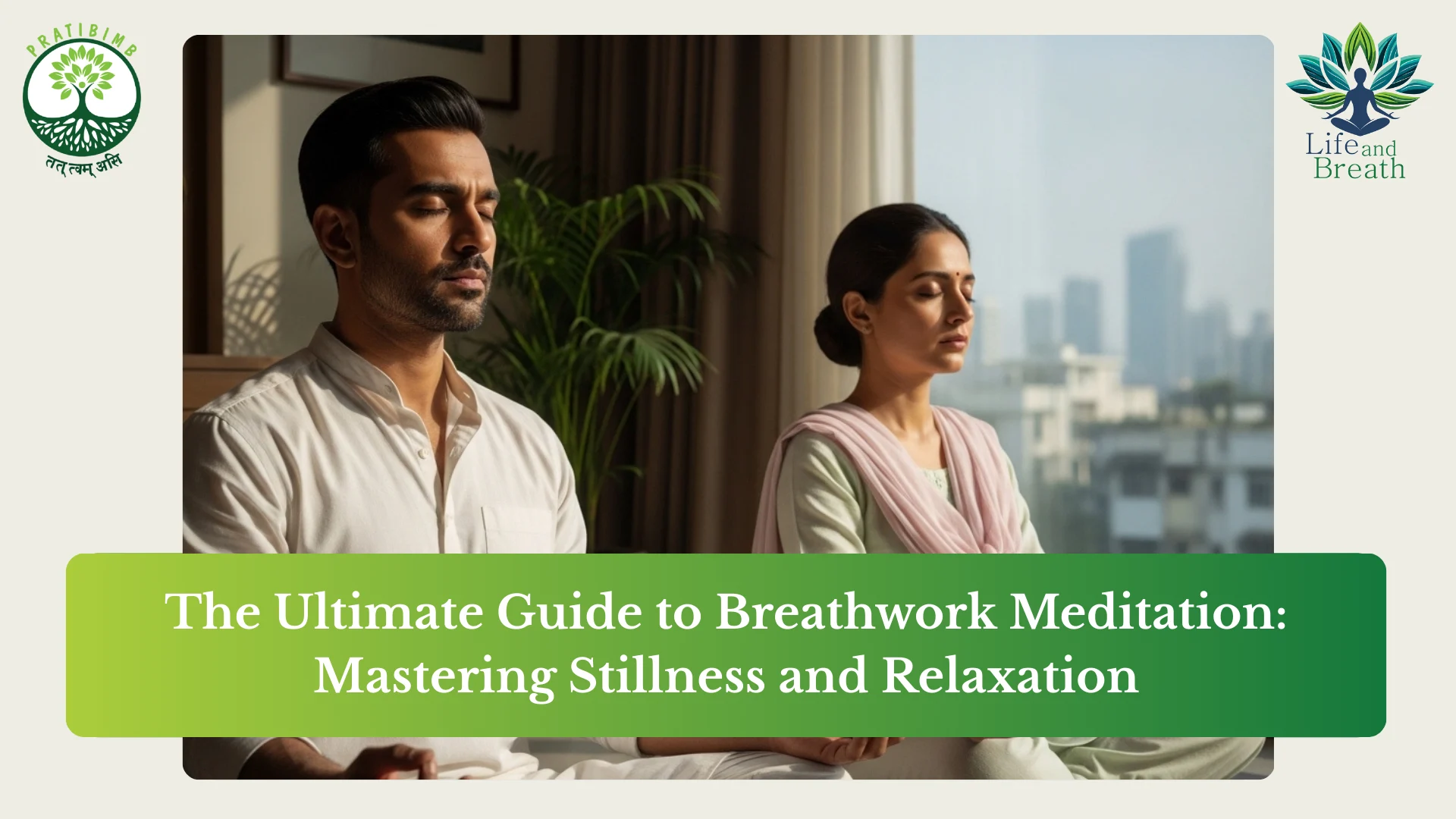
Breathwork meditation is a practice of focused concentration where an individual uses conscious breathing to anchor the mind and achieve a state of inner stillness. Unlike automatic breathing, this method acts as a bridge between the physical body and the mind, allowing practitioners to transition from a state of constant mental oscillation to one of deep, balanced calm.
The Core Philosophy: Why Stillness Comes First
In any guided breath meditation course, the primary objective is to learn the power of physical stillness. Stillness of the body is not merely a posture; it is the essential preparation that allows the mind to reach a state of calmness.
The Process of Becoming Aware
Meditation begins with the simple observation of the breath. As you begin your practice, follow these foundational steps:
-
- Observe the Inhalation: Simply notice the air entering your body without trying to manipulate its natural flow.
-
- Relax During Exhalation: As the air leaves your body, consciously relax every muscle from the top of your head down to your toes.
-
- Find the Rhythm: Allow your breathing to settle into a smooth, gentle, and flowing rhythm.
When your breath becomes steady, your mind naturally follows, settling into the destination of true meditation.
Why Beginners Need a Guided Breath Meditation Course
Starting a meditation practice can be challenging because the body and mind are often unaccustomed to quietude. Beginners frequently experience restlessness, racing thoughts, and a sense that silence is “too loud”.
The Benefits of Professional Guidance
Joining a guided breath meditation course helps immensely by providing a structured framework for the wandering mind.
-
- Instructional Anchors: In guided sessions, instructions are provided at every step, which naturally encourages the practitioner to listen and follow rather than get lost in thought.
-
- Engaged Awareness: Guidance keeps the mind actively engaged in the present moment, preventing it from wandering aimlessly.
-
- Correct Posture and Technique: You are guided on how to sit steadily and comfortably while being reminded to observe the breath rather than controlling it.
- Correct Posture and Technique: You are guided on how to sit steadily and comfortably while being reminded to observe the breath rather than controlling it.
Methods of Practice: Anchors for the Mind
Beyond basic observation, there are several traditional methods used to deepen focus during meditation.
1. Music Meditation
In this practice, the sound of soothing music serves as your anchor. By listening with full concentration while remaining physically still, you train the mind to stay fixed on a single point of awareness.
2. Sacred Sound and Chanting
Chanting the sacred sound “OM” in rhythm with your breath is a powerful way to settle the mind.
-
- Inhale gently to fill the lungs.
-
- Exhale while chanting “OM”, allowing the physical vibration of the sound to calm your mental state.
3. Meditational Affirmations
A key component of the “Life & Breath” science is the use of affirmations recited in harmony with the breath.
-
- Synchronization: As the affirmations are memorized, they are chanted softly—just loud enough for you to hear.
-
- Harmony: The movement of the breath and the rhythm of the words move together, bringing deep focus and inner stillness.

Using Meditation for Relaxation and Recovery
Meditation for relaxation is widely considered one of the most effective techniques for deep recovery. It provides what experts call “conscious rest”—a state where both the body and mind unwind more deeply than they do during standard sleep.
The Power of Conscious Rest
It is often said that one hour of deep meditation provides the restorative benefits of 3 to 4 hours of restful sleep. The specific benefits of this practice include:
-
- Calming the Restless Mind: It settles a disturbed or oscillating mind.
-
- Improved Clarity: It enhances your ability to concentrate and think clearly.
-
- Stress Reduction: It directly lowers the feelings of stress and anxiety.
-
- Emotional Balance: It supports a steady emotional state and overall well-being.
The Key to Success: Consistency
To gain these benefits, there is no shortcut. Meditation is not a theoretical subject; it is an experience that must be lived through regular practice. Through consistency, relaxation becomes your natural state, and peace becomes your internal default.
The Roots of Mindfulness Meditation in India
Mindfulness meditation in India is a practice that dates back thousands of years, rooted in the ancient science of breath and mind mastery.
The Legacy of the Yogis
In ancient India, breathwork and meditation were inseparable. Yogis would engage in Tapasya (deep meditative discipline) for long periods, using intense breath control to attain wisdom.
-
- The Steady Mind: The core lesson of this ancient science is that by observing the breath, the mind becomes steady.
-
- Natural Calm: When the breath is calm, thoughts naturally slow down.
Why We Must Return to Ancient Practices
In the modern world, human minds are overwhelmed by technology, constant competition, and digital stimulation. This has led to a significant increase in restlessness. Now, more than ever, returning to these traditional Indian practices is essential for mental survival.
Life & Breath: A Practical Path to Awareness
The “Life & Breath” course is designed as a gentle invitation to reconnect with ancient wisdom through practical, modern methods.
What the Course Teaches:
-
- 9 Powerful Breathing Exercises: Specific techniques to master your energy and breath.
-
- Meditational Affirmations: Sacred techniques to synchronize thought and breath.
-
- Methods for Calmness: Practical, everyday ways to settle a busy mind.
Mindfulness is not just about sitting quietly in a room; it is about living, breathing, and being fully alive in every moment.
Final Summary for Success
To truly transform your life through breathwork meditation, remember the three-step formula: Sit. Breathe. Practice.. By joining the “Life & Breath” course and practicing sincerely, you can experience the lasting benefits of this ancient science yourself.