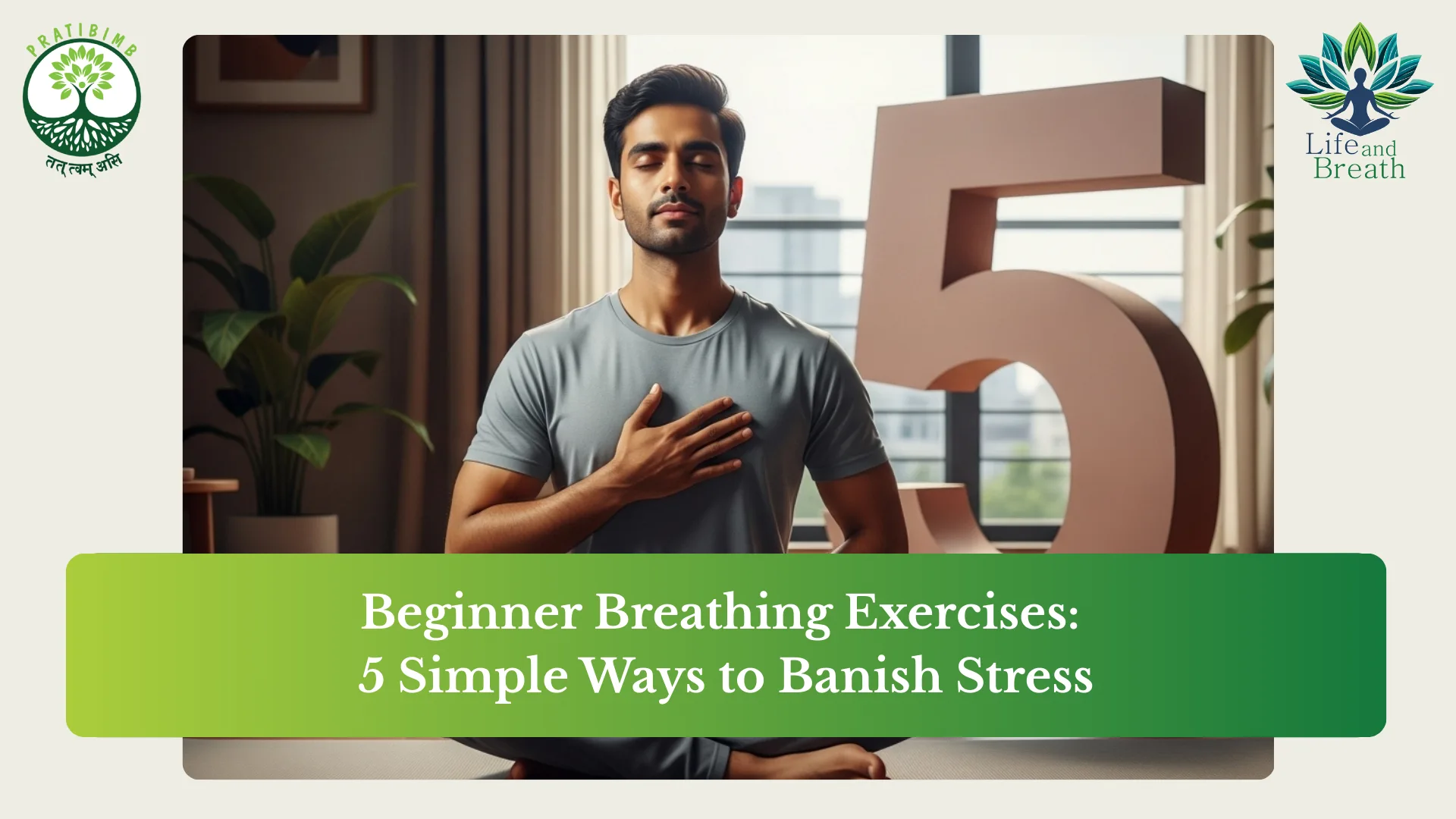
What are the best beginner breathing exercises for immediate stress relief?
The most effective beginner breathing exercises for stress relief include Diaphragmatic Breathing, The 4-16-8 Counting Breath, and Progressive Shoulder Release. These techniques work by stimulating the vagus nerve, which transitions the body from a “fight-or-flight” state to a “rest-and-digest” state, lowering cortisol levels and heart rate within minutes.
Why Breathing Matters: The Science of Conscious Rest
Breathing is the only autonomic bodily function that we can also control consciously. Most people spend their lives in a state of shallow “chest breathing,” which signals to the brain that they are under constant pressure.
When stress arrives—whether through unread emails, traffic jams, or long to-do lists—our breath becomes shallow and quick. Deep breathing exercises act as a physiological “reset button”. By taking a full, conscious breath, you send a signal to your nervous system that you are safe, allowing your tight muscles to relax and your racing mind to find a moment of space.
The Benefits of Practice:
-
- Immediate Physiological Shift: Slows the heart rate and reduces blood pressure.
-
- Mental Clarity: Creates a “pause” in the chaos of a busy day.
-
- Physical Relaxation: Helps release tension held in the jaw and shoulders.
-
- No Cost/No Gear: Can be performed anywhere—at a desk, on a bus, or in bed.
- No Cost/No Gear: Can be performed anywhere—at a desk, on a bus, or in bed.
5 Comprehensive Breathing Exercises for Beginners
1. The Simple Deep Breath (The Foundation)
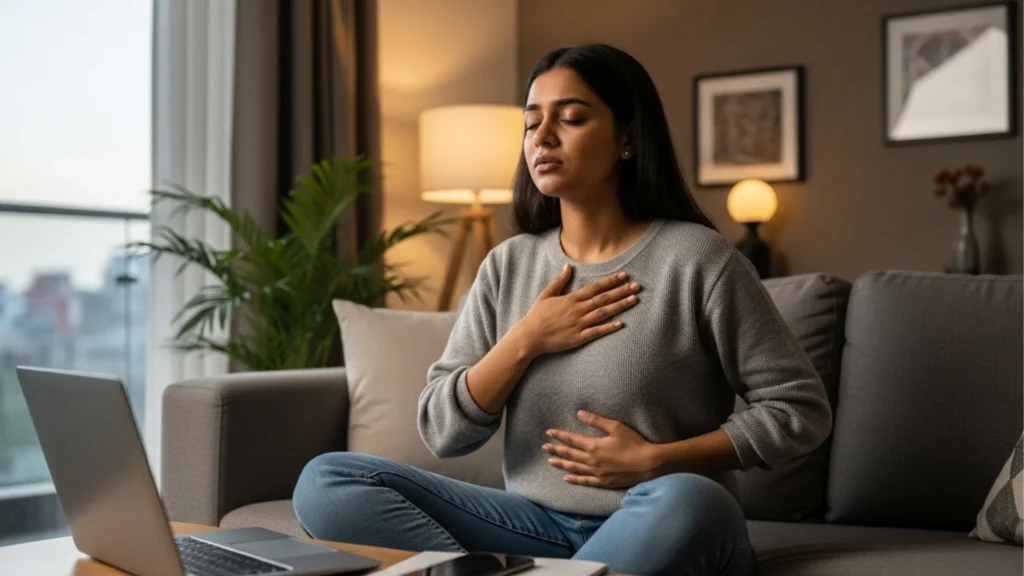
This is the fundamental starting point for all breathing exercises for beginners. It focuses on moving the breath from the upper chest down into the abdomen.
-
- Step 1: Sit comfortably in a chair or lie down on your back.
-
- Step 2: Place your right hand on your chest and your left hand on your stomach.
-
- Step 3: Inhale slowly through your nose. Aim to feel your left hand (on the stomach) rise higher than your right hand.
-
- Step 4: Exhale gently and fully through your mouth.
-
- Step 5: Repeat for 10 cycles. This reminds the body how to breathe fully after years of shallow habits.
- Step 5: Repeat for 10 cycles. This reminds the body how to breathe fully after years of shallow habits.
2. The 4-16-8 Counting Breath (Rhythmic Reset)
Adding a rhythm to your breath provides a “metronome” for a restless mind, making it one of the most effective deep breathing exercises for anxiety.
-
- The Inhale: Breathe in through your nose for a count of four.
-
- The Pause: Hold the breath gently for a count of two.
-
- The Exhale: Breathe out through your mouth for a count of six.
-
- Why it works: A longer exhale is the specific trigger for the parasympathetic nervous system to induce relaxation.
- Why it works: A longer exhale is the specific trigger for the parasympathetic nervous system to induce relaxation.
3. The Shoulder Release Breath (Physical Decompression)
Mental stress often manifests as physical tension in the neck and upper back. This exercise combines breath with targeted movement.
-
- The Action: As you take a deep breath in, shrug your shoulders up toward your ears as tightly as feels comfortable.
-
- The Release: As you exhale, let your shoulders drop down completely and heavily.
-
- The Result: You will often feel an immediate sense of lightness or warmth as the body lets go of hidden tension.
- The Result: You will often feel an immediate sense of lightness or warmth as the body lets go of hidden tension.
4. The “Quiet Morning” Ritual
This exercise focuses on habit-stacking to ensure you start your day with intention rather than reactivity.
-
- The Rule: Before checking your phone or reading notifications, sit up in bed.
-
- The Practice: Take ten slow, intentional breaths.
-
- The Goal: By beginning with stillness, you create a “gentle anchor” that keeps you calmer throughout the ensuing noise of the day.
- The Goal: By beginning with stillness, you create a “gentle anchor” that keeps you calmer throughout the ensuing noise of the day.
5. The “Micro-Pause” Breath
This is for the moments when you are in the middle of a stressful event, such as a difficult meeting or an argument.
-
- The Technique: You do not need a special posture. Simply notice the sensation of the air entering your nostrils.
-
- The Focus: Follow the breath all the way in and all the way out, just once.
-
- The Purpose: This one-breath practice breaks the cycle of “racing thoughts” and gives you a split second to choose your response rather than reacting blindly.
- The Purpose: This one-breath practice breaks the cycle of “racing thoughts” and gives you a split second to choose your response rather than reacting blindly.
Moving Beyond Basics: Should You Take a Guided Course?
While individual exercises are helpful, many find that a structured online breathing exercises course is the key to long-term success.
A guided course provides:
-
- Consistency: It is easier to stick to a routine when a calm voice is guiding you.
-
- Safety: Professional guidance ensures you aren’t straining or forcing the breath.
-
- Depth: You learn how to be “kinder to your nervous system” rather than just following a set of rules.
Overcoming Common Obstacles for Beginners
It is a common mistake to think these exercises must be done perfectly or for long periods.
-
- “I can’t stop my thoughts”: This is normal. The goal isn’t to stop thoughts, but to give the mind a “quiet metronome” (the breath) to return to.
-
- “I feel awkward”: The first few attempts often feel unnatural. Like any skill, your body needs time to relearn the habit of deep breathing.
-
- “I don’t have time”: Start with just three breaths. The “story” of your practice is about the quality of the pause, not the quantity of minutes.
Conclusion: A Calmer Story
Stress will always exist—deadlines and expectations aren’t going away. However, by carrying these five small tools in your pocket, you change how you meet that stress. Beginner breathing exercises are like opening a window in a stuffy room; the room stays the same, but the air suddenly feels lighter.
[Ready to go deeper? Explore our Online Breathing Exercises Course and start your journey to a calmer mind today.]