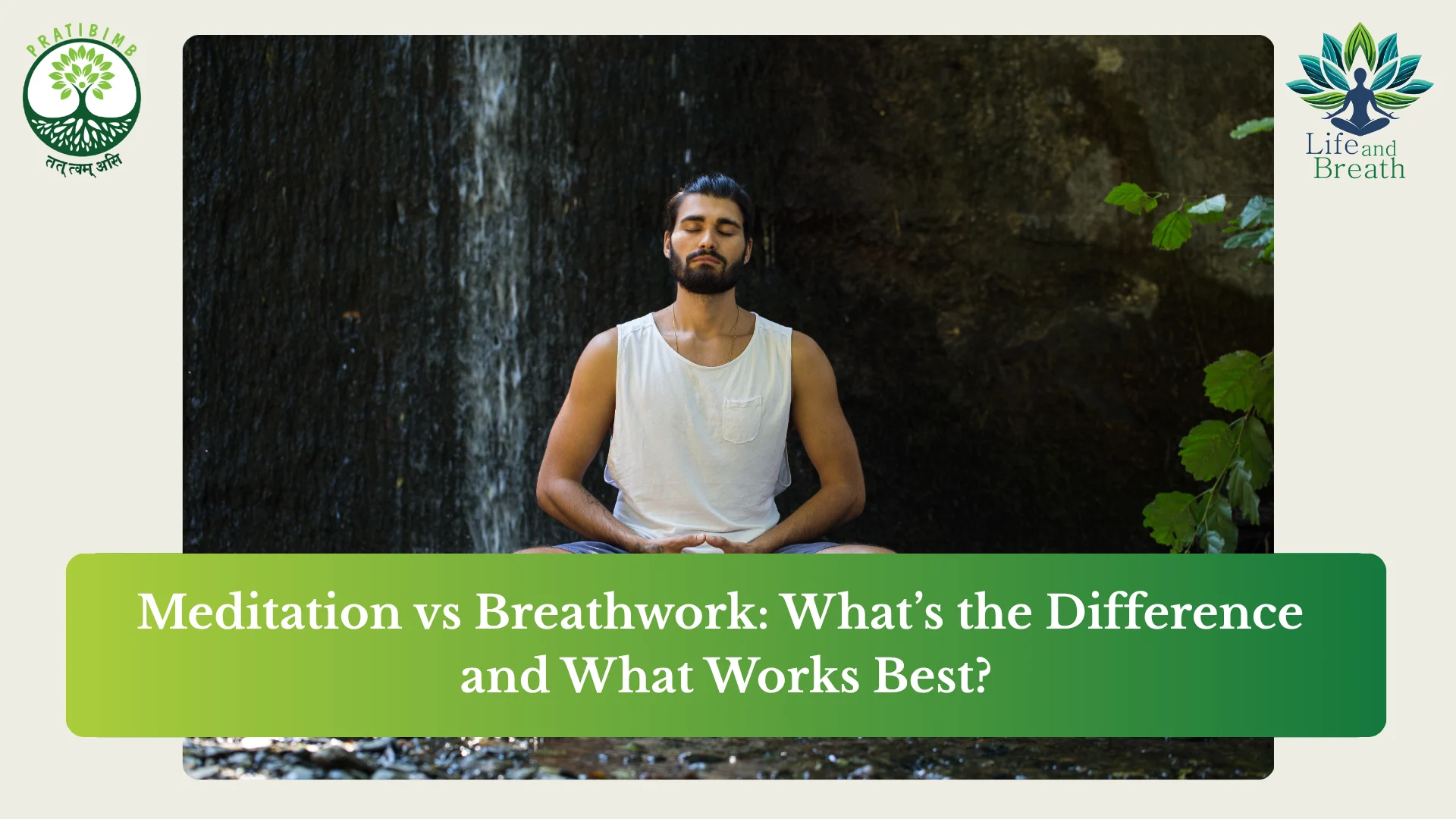
What is the difference between breathing and meditation?
The primary difference between breathing and meditation lies in your intent and action. Breathwork is an active practice where you intentionally change your breathing patterns—such as the pace, depth, or rhythm—to achieve a specific physical or emotional result. Meditation, conversely, is a practice of passive observation. In meditation, you do not try to change anything; you simply observe your thoughts, feelings, and natural breath with non-judgmental awareness.
The Core Concept: Action vs. Observation
In the modern wellness landscape, meditation vs breathwork are often grouped together. While both serve the goal of “Mind and Peace,” they function as different gears in the same machine.
Breathwork: Something You Do
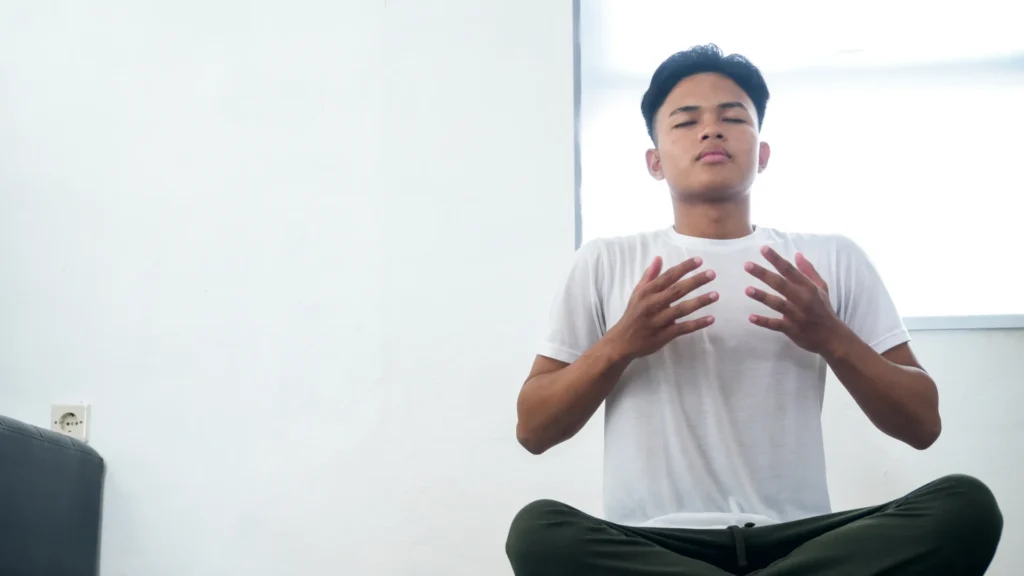
Breathwork is a proactive, intentional intervention. It is the “remote control” for your nervous system. When you practice breathwork, you are the director of your physiology. By adjusting how you breathe, you can manually override your body’s stress response.
- Active Engagement: You guide the breath through structured patterns (inhale–hold–exhale).
- State Shifting: It is designed to change how you feel in the immediate moment.
- Physiological Impact: It directly influences heart rate and blood oxygenation to create a noticeable physical shift.
Meditation: Something You Observe
Meditation is a destination of awareness. It is the art of being rather than doing. In meditation, you aren’t trying to fix your breath or silence your racing mind; you are simply witnessing the “now.”
- Passive Awareness: You observe thoughts as they come and go, like clouds passing in the sky.
- Non-Judgmental Presence: You accept the current state of your mind without trying to manipulate it.
- Long-Term Clarity: It builds the skill of staying steady regardless of internal or external noise.
Which is better: meditation or breathwork?
The answer to which is better meditation or breathwork depends entirely on your immediate needs.
- Breathwork is better when you feel physically overwhelmed, tense, or “off.” It is the superior choice for breaking a cycle of acute anxiety or racing thoughts because it gives the mind a physical task that forces the nervous system to calm down.
- Meditation is better when you want to build long-term self-awareness and emotional resilience. It is the better tool for understanding your mental patterns and learning how to respond to life’s challenges rather than reacting to them.
The Synergy: How Breathwork Prepares the Path for Meditation
One of the biggest struggles beginners face with meditation is a “loud” mind. Trying to sit in silence when your nervous system is in “fight or flight” mode can feel impossible. This is where the synergy between the two becomes vital.
The “Bridge” Effect
Breathwork acts as the bridge to meditation. By spending 5–10 minutes on active breathing techniques, you physically settle the body. Once the “motorway police” of the nervous system have stopped flashing their lights, the mind becomes naturally quieter.
When the body is calm, the transition into the “observer” state of meditation becomes effortless. Instead of fighting your thoughts, you find yourself naturally able to watch them.
Deep Dive: When to Reach for Each Tool
Use Breathwork When:
- Your Body Feels Tense: If you have a tight jaw, hunched shoulders, or a “knot” in your stomach.
- Your Emotions Feel Heavy: When you are on the verge of an emotional outburst or feel “stuck” in a mood.
- You Need Immediate Calm: If you have a presentation, a difficult conversation, or are experiencing a panic response.
- You Can’t Sit Still: If your restlessness makes sitting in silence feel frustrating.
Use Meditation When:
- You Want to Understand Your “Why”: To see the recurring stories your mind tells you.
- You Seek Stability: To build a baseline of peace that doesn’t easily break.
- You Want to Increase Focus: Training the mind to return to the present moment repeatedly.
- You are Ready for Self-Discovery: To move beyond just “feeling better” and toward “knowing yourself.”
From Technique to Lifestyle: The Ultimate Goal
As you progress in your journey with the Science of Life and Breath, the rigid line between meditation vs breathwork begins to fade.
Initially, you might see them as separate tasks on a to-do list. However, with consistent practice, they blend together. You learn to “shift” your breath when you notice stress rising in your daily life (breathwork), and you learn to “stay” with uncomfortable moments without being pulled away by them (meditation).
This is the state of Conscious Living. You are no longer a victim of your thoughts or your stress levels; you are the master of your own internal landscape.
Conclusion: Two Paths to One Center
Whether you choose the active path of breathwork or the silent path of meditation, the destination is the same: a more grounded, responsive, and peaceful version of yourself.
By understanding the difference between breathing and meditation, you empower yourself with a versatile mental health toolkit. You can use breathwork to change your state when it becomes overwhelming, and you can use meditation to change your relationship with your state over time.
Don’t feel the need to choose one and discard the other. Experiment with both. Use the breath to calm the storm, and use meditation to see the sky clearly.
Explore our ‘Science of Life and Breath’ courses to learn how to integrate these two powerful practices into your daily life.