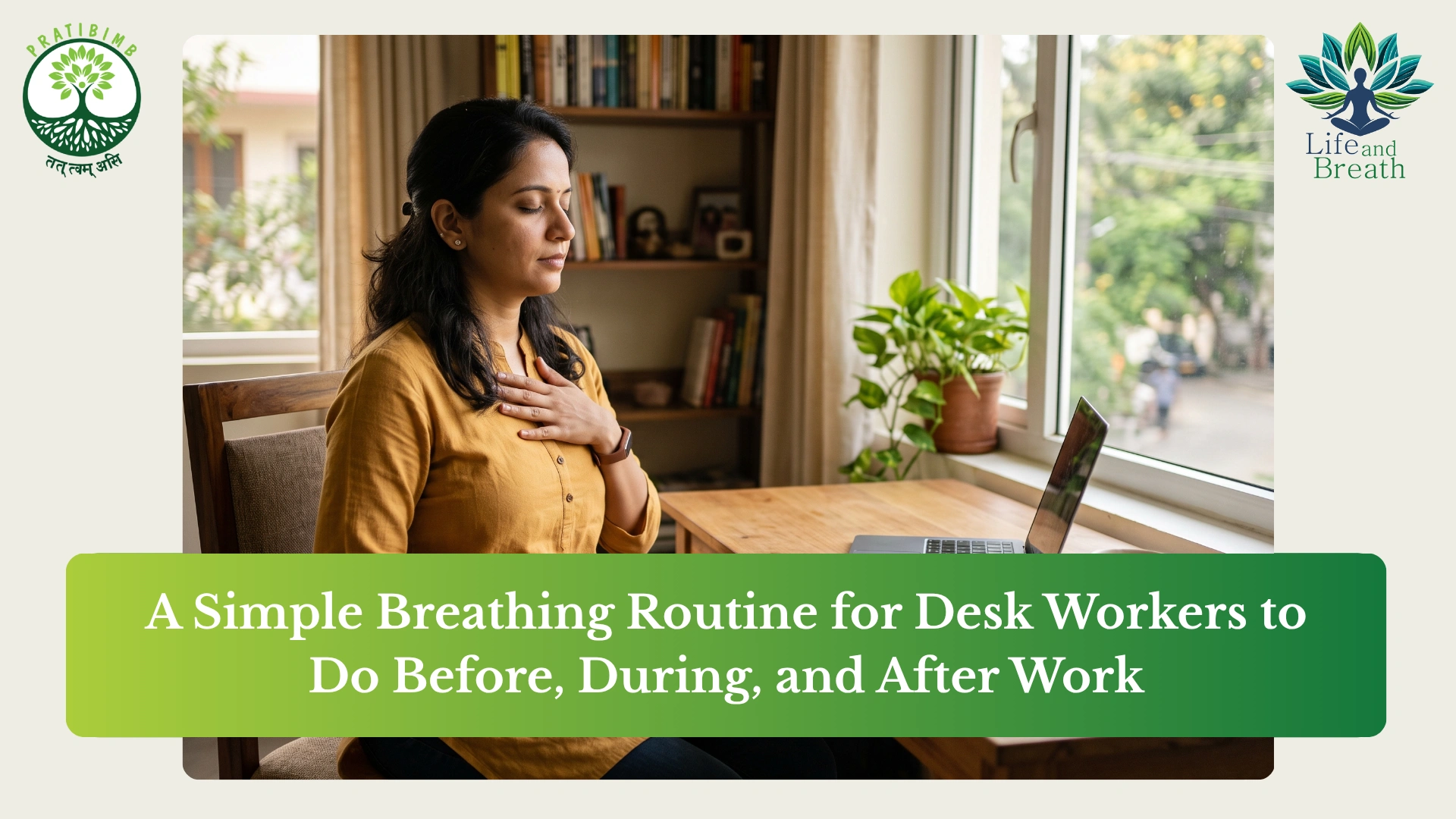
For many of us, the workday begins before we even realize it. We wake up, check our phones, rush through breakfast, commute, open our laptops and spend hours sitting in front of a screen. Somewhere between emails, meetings, deadlines and notifications, our breathing can become shallow and unconscious.
We breathe all day, of course—but how we breathe matters.
When we are stressed or intensely focused, we may unconsciously hold our breath or take quick, shallow breaths. Long hours at a desk can also encourage poor posture, which restricts the natural movement of the diaphragm and chest.
The good news is that you don’t need a meditation cushion, an hour of free time or a quiet retreat to reconnect with your breath. Just an intention.
A few minutes of intentional breathing before, during and after work can become a simple way to pause, reset and transition between different parts of your day. One can change their mood by changing rhythm of breath.
Here is a practical breathing routine designed specifically for desk workers.
Why Breathing Matters During a Workday
Breathing is automatic, but it is also something we can consciously influence.
Slow, comfortable breathing can encourage the body to move away from a heightened stress response and toward a calmer state. It can also provide a useful mental pause when you have been concentrating for long periods.
Before Work: Start Your Day With Your Breath
The way you begin your morning can influence how you approach the hours that follow.
Instead of reaching immediately for your phone or rushing into emails, consider giving yourself five minutes of quiet breathing.

The 5-Minute Morning Breathing Routine
Sit comfortably with your back reasonably upright. You can sit on a chair, your bed or the floor.
Relax your shoulders and unclench your jaw.
Place one hand gently over your abdomen if that helps you notice your breathing.
Step 1: Observe — 1 minute
Don’t change your breathing immediately.
Simply notice:
Is your breath fast or slow?
Are you breathing mostly through your nose or mouth?
Does your abdomen move as you breathe?
Are your shoulders tense?
There is nothing to fix.
Just observe.
This simple awareness can help you begin the day with greater presence.
Step 2: Slow the Exhale — 2 minutes
Breathe in gently through your nose for approximately 4 seconds.
Then breathe out slowly for approximately 6 seconds.Do it for a minute or two.
The longer, relaxed exhalation is intended to encourage a calmer breathing rhythm.
Step 3: Energising Breaths — 1 minute
Now allow your breathing to become slightly deeper while remaining comfortable.
Take a gentle nasal inhale and a relaxed exhale.
Repeat approximately 5–10 times.
The goal isn’t to take the biggest breath possible. In fact, excessively deep or rapid breathing can make some people light-headed.
Think full and easy, rather than big and forceful.
Step 4: Set Your Intention — 1 minute
Finish by sitting quietly.
Take one comfortable breath and remind yourself:
“I don’t have to rush. I can focus on one thing at a time.”
Then begin your workday.
These morning breathing exercises for energy aren’t about forcing yourself into a hyper-alert state. They are about becoming more awake, centred and intentional before the day’s demands begin.
During Work: Use Your Breath as a Mini Reset
You don’t need to wait for lunchtime to take a breathing break.
In fact, one of the easiest ways to make breathing part of your workday is to connect it with something you already do.
For example:
Every time you send an important email, finish a meeting or get up for water, take three conscious breaths.
You can use the technic from the book atomic habits where you stack your new habit with a old one. For example – once you brush your teeth add a ritual just after brushing so it becomes a reminder and habit. So choose actions that you do everyday and stack a habit.
The 60-Second Desk Reset
When you notice yourself becoming tense, stop typing.
Place both feet comfortably on the floor.
Lower your shoulders.
Unclench your jaw.
Take a gentle breath in through your nose.
Then breathe out slowly.
Repeat for 5–6 breaths.
As you breathe, allow your shoulders and abdomen to relax.
This is one of the simplest quick breathing exercises because it takes roughly one minute and doesn’t require you to leave your desk.
The 3-Minute Work-Stress Breathing Exercise
When deadlines or difficult conversations leave you feeling tense, try this slightly longer routine.
Minute 1: Notice
Close your eyes if you are comfortable doing so.
Notice your breathing without trying to change it.
Also notice where you are holding tension.
Perhaps it is your forehead.
Perhaps your jaw.
Maybe your shoulders or stomach.
Simply observe.
Minute 2: Breathe Slowly
Inhale gently through your nose for about 4 seconds.
Exhale slowly for about 6 seconds.
Continue for several cycles.
Keep the breath comfortable.
Minute 3: Release
With each exhalation, consciously soften one area of the body.
Relax your forehead.
Relax your jaw.
Drop your shoulders.
Soften your hands.
Relax your abdomen.
Then return to your work.
These breathing exercises for work stress can be particularly useful as a transition after a stressful meeting or before beginning a demanding task.
Don’t Forget Your Posture
Breathing and posture are closely connected.
After sitting for hours, many people begin to lean toward their screens. The shoulders round forward and the head moves toward the monitor.
Before doing your breathing exercise, make a small adjustment.
Imagine the crown of your head gently reaching upward.
Allow your shoulders to relax rather than forcing them backward.
Keep your feet supported.
Let your abdomen remain relaxed.
Then breathe naturally.
You don’t need a rigid “perfect posture.” The objective is simply to create enough space for comfortable breathing.
A Simple Rule: Breathe Before You React
One of the most valuable ways to use breathing at work isn’t necessarily a formal exercise.
It is creating a tiny gap between what happens and how you respond.
You receive an irritating email.
Pause.
Breathe.
You hear unexpected criticism.
Pause.
Breathe.
Your meeting runs over time.
Pause.
Breathe.
You feel overwhelmed by your to-do list.
Pause.
Breathe.
Even three conscious breaths can interrupt the automatic cycle of tension → reaction → more tension.
Your breath becomes a reminder:
Pause first. Respond second.
After Work: Tell Your Body That the Workday Is Over
One common problem with desk work is that the physical workday ends before the mental workday does.
You close your laptop—but continue thinking about emails.
You leave the office—but mentally replay a conversation.
You reach home—but your mind is already preparing tomorrow’s tasks.
A short evening breathing routine can create a psychological boundary between work mode and personal time.
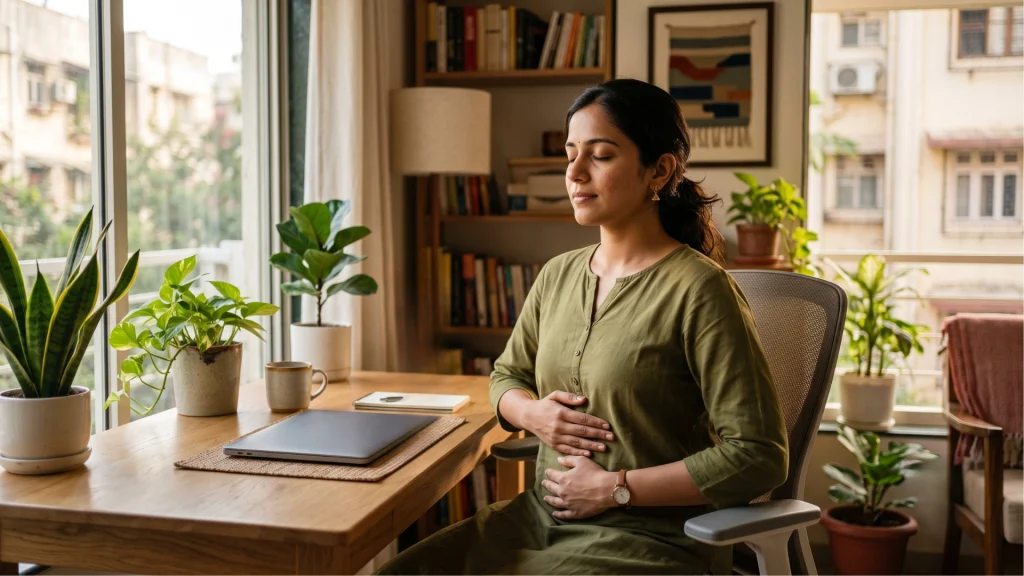
The 5-Minute After-Work Reset
Sit comfortably or stand somewhere quiet.
1. Take a natural breath
Don’t immediately try to change anything.
2. Take five slow breaths
Inhale gently through your nose.
Allow the exhalation to be slow and relaxed.
3. Release the day
With every exhale, consciously relax your body.
Let your shoulders drop.
Relax your hands.
Soften your face.
Release your jaw.
4. Mentally close the workday
Take one final breath and say silently:
“Work is complete for today. I can return to it tomorrow.”
You may be surprised at how powerful a simple transition ritual can become.
Five minutes every morning can be more sustainable than deciding to practise for 30 minutes and abandoning the habit after a week.
Make Breathing Part of Your Work Culture
A team meeting could begin with 60 seconds of quiet breathing.
Employees could be encouraged to take a one-minute breathing break between long meetings.
A workplace wellness programme could teach employees simple breathing techniques that can be practised at their desks.
These small interventions require virtually no equipment or space.
More importantly, they send an important message:
Taking a moment to pause is not wasted time.
A Few Important Things to Remember
Breathing exercises should feel comfortable.
You should not force your breath, hold it for long periods or deliberately breathe extremely rapidly unless you are practising a technique under appropriate guidance.
If you feel dizzy, uncomfortable, breathless or light-headed, stop and return to your normal breathing.
People with respiratory, cardiovascular or other medical conditions should seek appropriate professional advice before starting unfamiliar breathing practices.
Your Breath Is Always Available
The beautiful thing about breathing is that you don’t need to purchase anything to begin.
The practice is simply to notice it.
And for those few seconds, do nothing except breathe.
Sometimes the simplest reset is the one we carry with us all day