Introduction
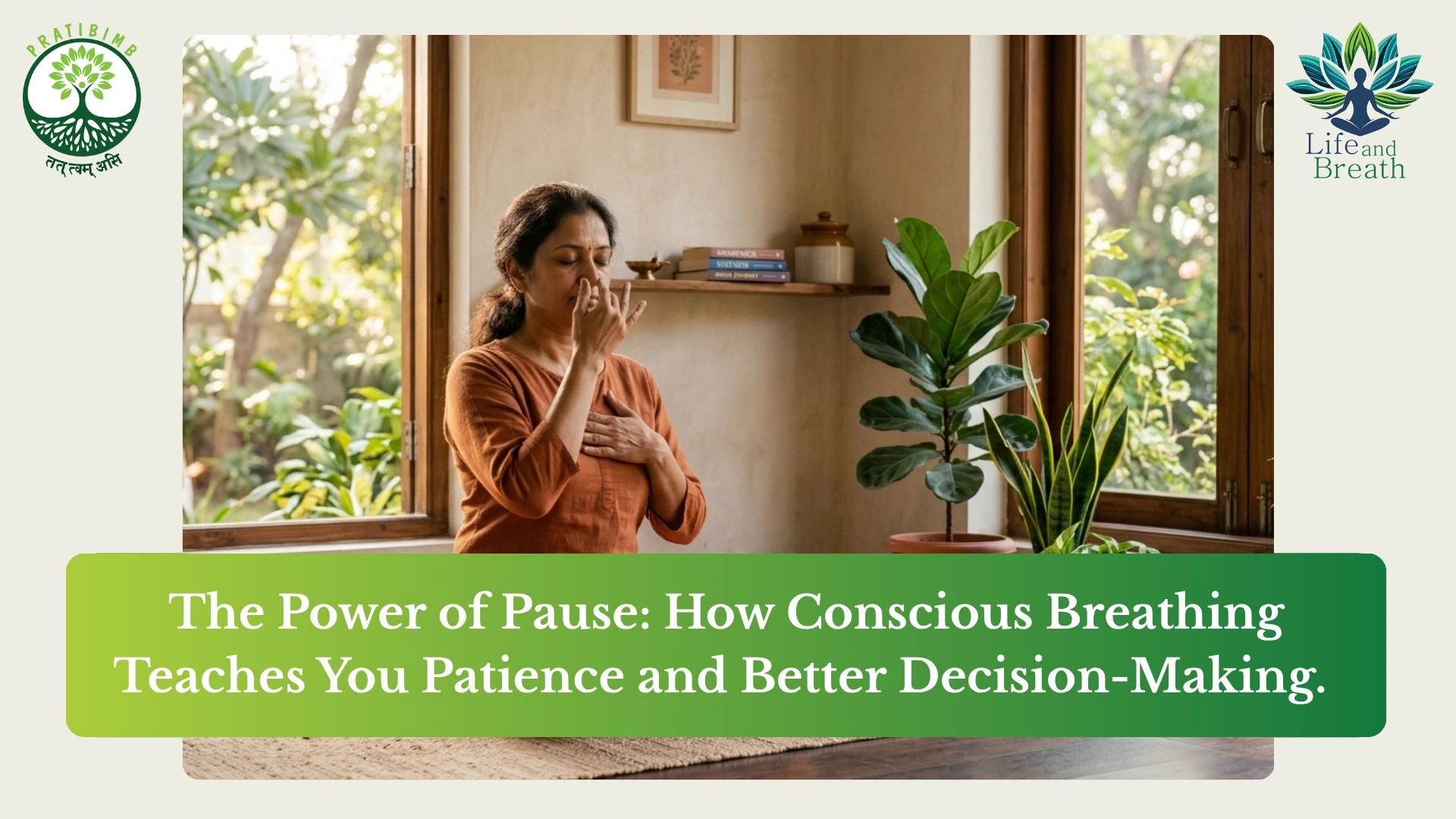
There is a small space between what happens to us and how we choose to respond. Sometimes, that space lasts only a few seconds, but it can change the way we handle a difficult conversation, emotion or decision. Conscious breathing is the practice of bringing deliberate attention to our natural breath— simply noticing the inhale, the exhale and what is happening within us. Rather than trying to control every thought or emotion, breath awareness gives us a moment to pause and observe. Through regular meditation practice and mindfulness, this simple pause can become a way to develop greater patience, awareness, and clarity.
Key Takeaway
Conscious breathing creates a pause between reaction and response. By returning our attention to the breath, we can become more aware of our thoughts, emotions and impulses before choosing how to respond.
How Does Conscious Breathing Create a Pause?
Much of everyday life happens automatically. Something happens, and we react. A thought appears, and we immediately believe it. An emotion rises, and we act from it. We rarely stop to consider what is happening between the experience and our response.
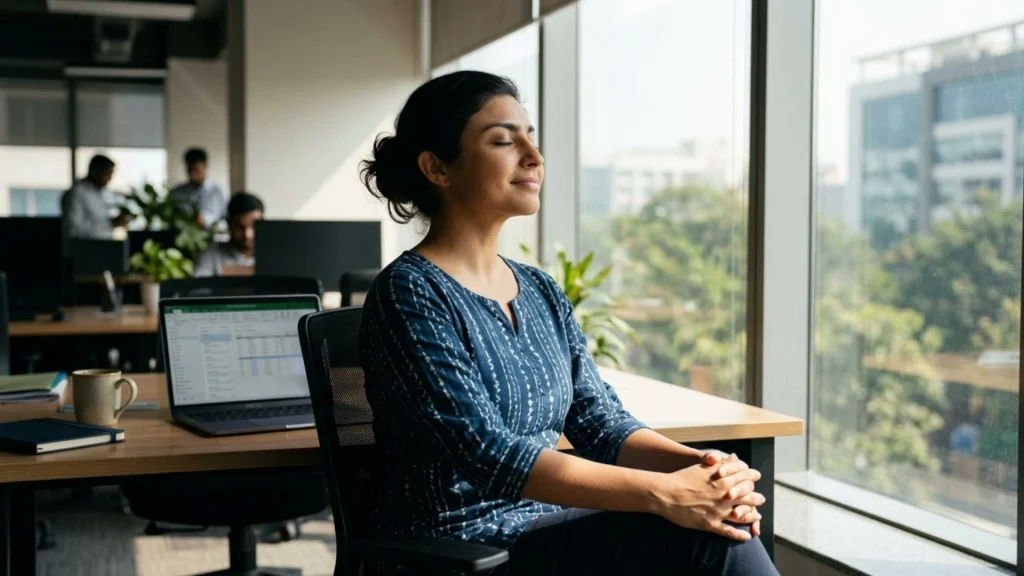
This is where the power of the pause begins. Imagine receiving a message that makes you angry. Your first instinct may be to reply immediately. But instead, you take three conscious breaths. The message has not changed, yet your relationship with the moment may have. You may realise that you misunderstood it, decide to respond more calmly, or recognise that the conversation can wait.
The pause does not remove the emotion. It simply creates space around it. Within that space, we can observe what we are feeling instead of being completely driven by it. This is one of the most valuable lessons of breath awareness: a reaction does not always have to become an action.
How Does Breath Awareness Bring Us Back to the Present?
Our minds are constantly moving between the past and the future. We replay conversations, anticipate problems, remember mistakes and plan what might happen next. Even when our bodies are in the present, our attention may be elsewhere.
The breath gives us something immediate to return to. It is always happening now. When we pay attention to the natural rhythm of breathing, we bring our awareness back to the present moment.
This is why the breath has an important place in many forms of mindfulness meditation. The goal is not to empty the mind or stop thinking. Thoughts will continue to arise. Instead, we notice when our attention has wandered and gently return to the breath
That returning is the practice. Each time we notice and come back, we strengthen our ability to observe rather than automatically follow every thought. The breath can become more than a physical process. It can serve as a doorway into observing our inner world.
What Can We Notice Through Breath Awareness?
When we become quiet enough to pay attention, we may begin to notice how our breathing changes with our internal state. When we are tense, the breath may become quicker or shallower. When we are settled, it may naturally become quieter. Observing these changes can help us recognise patterns in our thoughts, emotions and physical responses.
The purpose is not to fight or suppress what we discover. It is to observe without immediately judging. We begin to notice what makes us impatient, what causes us to become defensive and how quickly we move from an experience to a reaction.
This inward observation is an important aspect of contemplative practice. Greater awareness does not necessarily change the world around us, but it can change how consciously we meet it.
Can Meditation Practice Help Us Practise Patience?
Patience can be practised, and meditation provides an opportunity to practise it repeatedly.
Patience is often treated as a personality trait—something we either naturally possess or lack. Meditation offers another perspective: patience can be practised.
Every time we sit quietly with the breath, we practise staying present. We may become restless or distracted, yet instead of immediately stopping, we notice what is happening and return. Every return is a small exercise in patience. Over time, this practice can influence the way we approach difficult moments. We may become more comfortable with uncertainty, listen a little longer before responding, or sit with an uncomfortable emotion without immediately acting on it.
The goal is not to become someone who never feels impatient. It is to recognise impatience when it appears. Once we notice it, we have a choice about what happens next.
What Is the Difference Between Reacting and Responding?
There is an important difference between reacting and responding. A reaction is often immediate and automatic. A response contains awareness and choice.
If someone says something hurtful, our immediate reaction might be, “I need to say something back.” A conscious pause creates another possibility: “I am hurt. Let me decide how I want to respond.” The emotion is still real, but it no longer has to determine the next action.
This is where meditation practice becomes relevant beyond the time spent sitting quietly. Its value can be found in ordinary situations—when we are frustrated, overwhelmed, criticised or uncertain. The difficult conversation itself becomes an opportunity to practise awareness.
How Can Conscious Breathing Support Better Decision-Making?
Conscious breathing does not tell us what decision to make. Instead, it can give us enough space to notice what is influencing our decision.
When we are angry, anxious or overwhelmed, everything can feel urgent. A few conscious breaths can interrupt that momentum and allow us to ask: What am I feeling? What am I thinking? What do I actually know? And what response do I want to choose?
The aim is not to remove emotions from decision-making. Emotions are a natural part of being human. The aim is to become aware of them before allowing the first impulse to determine our actions. The breath becomes a bridge between feeling and choosing.
Why Is This Pause Important in Everyday Life?
Formal meditation has its place, but awareness need not remain on a meditation cushion. We can practise conscious breathing before opening a difficult email, entering an important conversation, responding to criticism or making a significant decision.
Even a few seconds can become a moment of mindfulness.
The practice is simple: pause, notice the breath, observe what is happening within you and then choose how you want to proceed. With repetition, the pause can become more familiar. Instead of automatically reacting, we may begin to remember that we have another option. Perhaps this is the deeper value of conscious breathing. It does not ask us to withdraw from life. It teaches us to meet life with greater awareness.
A Simple Three-Breath Practice
The next time you feel overwhelmed or impatient, take three natural breaths.
First breath — Arrive.
Notice the inhale and exhale. Ask yourself what is happening within you.
Second breath — Observe.
Notice any tension, thoughts or emotions without trying to change them.
Third breath — Choose.
Ask yourself: “How do I want to respond to this moment?”
The practice may take less than a minute, but it can remind us that we do not have to act on every impulse the moment it appears.
Conclusion: One Breath, One Pause, One Choice
We cannot control everything that happens around us, but we can become more conscious of how we meet each moment. Conscious breathing offers a simple way to create that space. One breath can interrupt a reaction. One pause can create awareness. And awareness can create choice. Through regular meditation practice and the contemplative exploration of breath, we can learn that patience is not simply waiting—it is staying present long enough to choose our response.
Pause. Breathe. Notice. Choose.