What Is Breath-Based Healing?
Breath-based healing is a mind-body approach that uses conscious breathing and meditation to support awareness, relaxation, nervous-system regulation and the body’s natural ability to restore balance.
“The natural healing force within each one of us is the greatest force in getting well.” – Hippocrates
The human body has an extraordinary capacity to adapt, regulate, repair and recover. Our thoughts, emotions, breathing patterns and physical health are closely interconnected.
You may be doing everything you believe you should be doing for your health and still feel tired, tense, restless or mentally exhausted. When we remain trapped in a cycle of chronic stress, anxiety or internal pressure, the nervous system can remain in a heightened state of alertness. You may notice:
- A faster heart rate
- Increased muscle tension
- Changes in stress-hormone activity
- Digestive discomfort
- Difficulty relaxing or switching off
Your body signals stress long before your mind acknowledges it. Practicing breathwork and meditation unlocks breath-based healing to help your nervous system pause, restore balance and reconnect.
What Are the Signs That Your Mind and Body Need a Stress Reset? “Your body hears everything your mind says.” – Naomi Judd
Our body is constantly responding to
- The stress we carry
- The sleep we miss
- The emotions we suppress
- The demands we place on ourselves
Persistent stress can show up through physical, emotional and behavioural signals. Recognizing these signs may be the first step toward creating greater balance.
Here are seven signs that your mind and body may be asking for a breath-based regulatory reset.
1. Are You Breathing Shallowly or Sighing Frequently?
Frequent sighing, breath-holding or shallow, chest-dominant breathing can occur during periods of stress or tension, thereby restricting full oxygen exchange in the lungs.
Instead of judging your breathing pattern, simply notice it. Awareness itself can become the first step towards changing your relationship with your breath.
2. Is Your Body Holding on to Persistent Tension?
Physical tension is often one of the clearest ways stress manifests in the body. You may notice stress accumulating in familiar sites, restricting blood flow and tissue recovery in key muscle groups. You may notice
- High, tight shoulders
- A stiff neck or a persistent ache across the upper back.
- A clenched jaw
- A tense forehead or furrowing brow
- Lingering dull tension headaches
- General muscular stiffness that keeps you from feeling truly at ease.
Slowing down and taking conscious, comfortable breaths can help you become aware of your body’s stress response restoring physical posture and ease of movement.
3. Are You Experiencing Emotional Overload?
When your emotional capacity is stretched to the limit, small setbacks feel overwhelming. Running on emotional empty can make self-regulation more tough. You might find yourself:
- Snapping at loved ones
- Living with persistent irritability.
- Reacting automatically
- Lacking the mental space needed to process stress.
Breath awareness can create a small space between stimulus and response – a moment in which you can pause rather than react automatically.
4. Is Your Mind Tired but Still Wired at Bedtime?
A physically exhausted body does not always mean a quiet mind, especially when stress keeps you mentally switched on. Elevated night-time cortisol levels keep your brain alert and disrupts natural sleep cycle leading to:
- Racing thoughts at bedtime
- Replaying past conversations
- Running through endless to-do lists
- Imagining worst-case scenarios
- Feeling physically exhausted but unable to settle
Rather than forcing yourself to sleep, focus on creating conditions that encourage relaxation. Mindful awareness and conscious breathing draw your attention away from late-night mental chatter, triggering a parasympathetic response that naturally prepares your body for rest.
5. Do You Feel Restless, Numb or Disconnected from Your Body?
Living entirely in your head – analysing, planning and worrying – makes it easy to lose touch with your body’s signals. You might:
- Ignore hunger or thirst
- Miss early signs of fatigue
- Feel restless or disconnected
- Struggle to remain present
Breath awareness gently brings your attention back to the present moment, re-establishing a healthy mind-body connection.
6. Are You Living in “Survival Mode”?
When your system is overloaded, daily demands feel like constant emergencies. You may find yourself:
- Always feeling rushed and unable to slow down.
- Pushing through fatigue only to wake up tired.
- Juggling too much at once and struggling to switch off.
You don’t need a better time management system – you need permission to pause. Shift out of doing and step back into breathing.
7. Could Stress Be Affecting Your Physical Health?
Stress doesn’t just stay in your head; it impacts your nervous, digestive, hormonal and immune systems. You might experience:
- Digestive distress such as bloating, reflux or appetite changes.
- Flare-ups in IBS, eczema, arthritis or other autoimmune conditions. Persistent muscle fatigue.
- Greater difficulty managing existing health concerns.
Practicing slow, intentional breathwork can be one complementary way to interrupt patterns of physiological stress and support healing.
Important Medical Disclaimer:
- Stress management and breathwork are complementary tools designed to support, not replace professional medical care.
- Stress is rarely the sole cause of chronic symptoms.
- Never ignore severe or worsening issues as ‘just stress’- consult a doctor. Always consult your doctor before modifying any prescribed medications or treatment plans.
How Do Breathwork and Meditation Work Together?
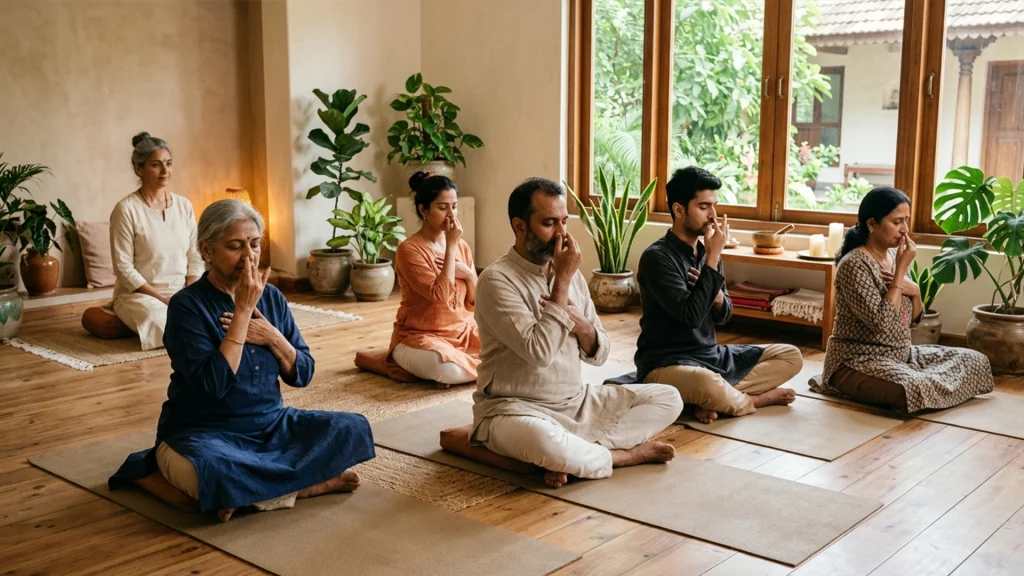
Breathwork and meditation are complementary tools that anchor you in the present. Breathwork brings conscious attention to breathing providing physical control over your body’s stress response, while meditation builds the capacity to observe thoughts, emotions, and sensations without judgment.
Together, they empower you to:
- Anchor in the present moment
- Pause amid overwhelm and spot early stress
- Release physical tension and restore internal balance
- Respond intentionally rather than react automatically
Your breath is a live reflection of your emotional state and one of the few physiological processes you can consciously influence. Stress leads to shallow gasps or held breath, while safety produces deep belly breaths.
“Mindful breathing isn’t about forcing healing- it’s about creating the conditions that allow your body to naturally restore balance.”
Breath is not just something you take. It is something you can learn to listen. Because your breath reflects how you feel, shifting your breathing pattern is the most accessible way to change your mind-body state.
How Can You Take the Next Step in Your Healing Journey?
Beginning your healing journey doesn’t require complex techniques – a few intentional minutes of breathing is all it takes.
“Start small with two quiet minutes and a moment of listening.”
If consistency is a challenge, searching for breathwork and meditation near me or mindfulness meditation in India can provide structured guidance. You can also join virtual breathwork classes in India from anywhere.
Whether you practice alone at home or join a guided group, the true value lies in showing up consistently, not practicing perfectly.
Life & Breath Sessions by the Pratibimb Charitable Trust offer deep breathing exercises and breathwork meditation in daily practice sessions designed to promote holistic health, emotional balance and long-term consistency.
By integrating intentional movement with breath, these sessions release stored physical tension and anchor your mind in the present. Combined with empowering positive affirmations, you leave feeling stronger, grounded, deeply resilient and better connected with yourself.
“A few quiet moments each day can matter more than hours of striving for perfection.” Conclusion
Recognizing signs of nervous system overload – shallow breathing, persistent muscle tension, emotional reactivity, physical discomfort, difficulty settling at night – is the first step towards recovery. Incorporating short, intentional breath practices supports your body’s natural healing capacity.
“True practice isn’t about perfect breath or an empty mind. The real goal is conscious awareness, comfortable observation and learning to respond rather than react.”
Can I Practise Breathwork at Home?
Definitely. Mindful breathing can be performed anywhere. Choose a quiet comfortable environment and keep the practice gentle.
Is Breathwork a Substitute for Medical Treatment?
Breathwork is a complementary wellness tool and should never replace professional medical evaluations, prescribed medications or medical treatments.
References for section on Signs That Your Mind and Body Need a Stress Reset
1. National Center for Complementary and Integrative Health (NCCIH). Stress and Meditation and Mindfulness: Effectiveness and Safety.
https://www.nccih.nih.gov/health/meditation-and-mindfulness-effectiveness-and safety
2. The health effects of diaphragmatic breathing: A systematic review. Chan Young Kwon et al. Complementary Therapies in Medicine 2026Volume 96. https://www.sciencedirect.com/science/article/pii/S0965229925001931
3. The Mind-Body Connection in Stress and Immunity: A Systematic Review. L Niharika et al. Research Article | Volume 14 Issue 6 (Nov – Dec, 2024) | Pages 303 – 306.
Final Takeaway
Your body often speaks through your breath before your mind recognizes stress. Unaddressed stress leads to exhaustion, physical tension and systemic burnout, making breath-based practices an essential daily tool for overall wellbeing, helping you to pause, listen inward and reconnect with your body.
“Almost everything will work again if you unplug it for a few minutes, including you.” — Anne Lamott