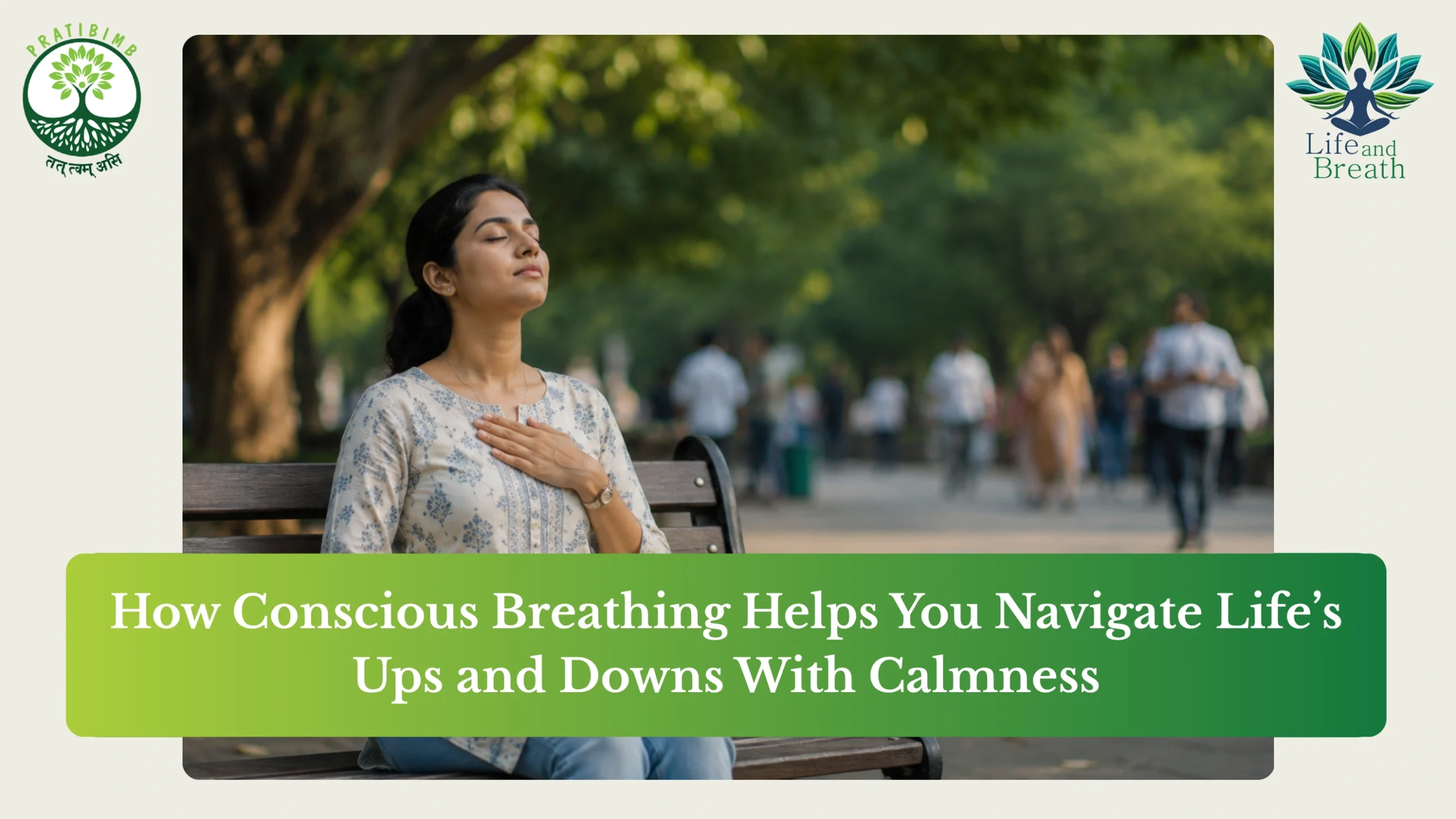
“Life is a series of natural and spontaneous changes. Don’t resist them; that only creates sorrow. Let reality be reality. Let things flow naturally forward in whatever way they like.” – Lao Tzu
“Let your life lightly dance on the edges of Time like dew on the tip of a leaf.” – Rabindranath Tagore
Two distinct voices from two different cultures, yet both point to the same timeless truth: Life is unpredictable, but calmness is a choice.
Riding the Waves: Navigating Life’s Ups and Downs
Let’s take a moment to just acknowledge how heavy life can feel sometimes. We live in a world that never stops moving, constantly pulling us between the echoes of yesterday and the anxieties of tomorrow. We live in a world that rarely hits the pause button. Between work deadlines, family responsibilities and the endless buzz of smartphone notifications, it is easy to feel like you are constantly rushing through life.
At times, life can feel like a storm – unpredictable, intense and difficult to navigate. When the chaos hits, most of us try to push through, leading to burnout, irritability and physical exhaustion. In those moments, being told to “just relax” feels impossible.
We search for external solutions to find peace, but what if the most powerful tool to regain your calm, clear your head and steady your mind was already right under your nose? It is your breath.
“Breath is The Anchor in the Storm, Your Greatest Lifeline.”
Your breath is the anchor that keeps you grounded. By practicing the rhythmic awareness of breath daily, you develop a deep, unshakeable calmness that allows you to face life’s highest highs and lowest lows with equal grace.
The Silent Superpower: Upgrading Your Brain from Reflex to Response Twelve to twenty times a minute and nearly thirty thousand times a day our lungs expand and contract without a single conscious thought. Because it happens automatically, this vital process of breathing, a physiological miracle, is easily ignored. We treat it as a background reflex rather than what it truly is: a lifeline. When stress spikes, our breathing becomes shallow and fast, signalling danger to the brain. Turning that automatic reflex into an intentional act of conscious breathing shifts the dynamic entirely:
- Shifts system states: Moves your body out of “fight-or-flight” survival mode and into “rest-and-digest” mode.
- Creates a circuit breaker: Turns a passive biological need into an active tool for mental freedom.
- Clears the noise: Transforms internal chaos into quiet clarity.
What is conscious breathing- The Art of Simple Awareness
Conscious breathing isn’t about clearing your mind or reaching perfection. It is simply about taking a soft, intentional pause to show up for yourself. It is a way of reminding your heart that you are safe, you are here and you can handle this next moment, one gentle breath at a time.
Conscious breathing, often practiced as breathing meditation, is the simple act of turning your automatic breath into an intentional, focused action. It is the bridge between your physical body and your mind. It serves as an immediate physical anchor, allowing you to navigate life’s daily highs and lows without losing your inner peace.
Mindful breathing isn’t about changing how you breathe – it’s about learning to listen. It doesn’t ask you to fix your breath; it asks you to meet it. By observing your natural inhalation and exhalation without judgment, you automatically anchor your wandering mind and soothe a tense body.
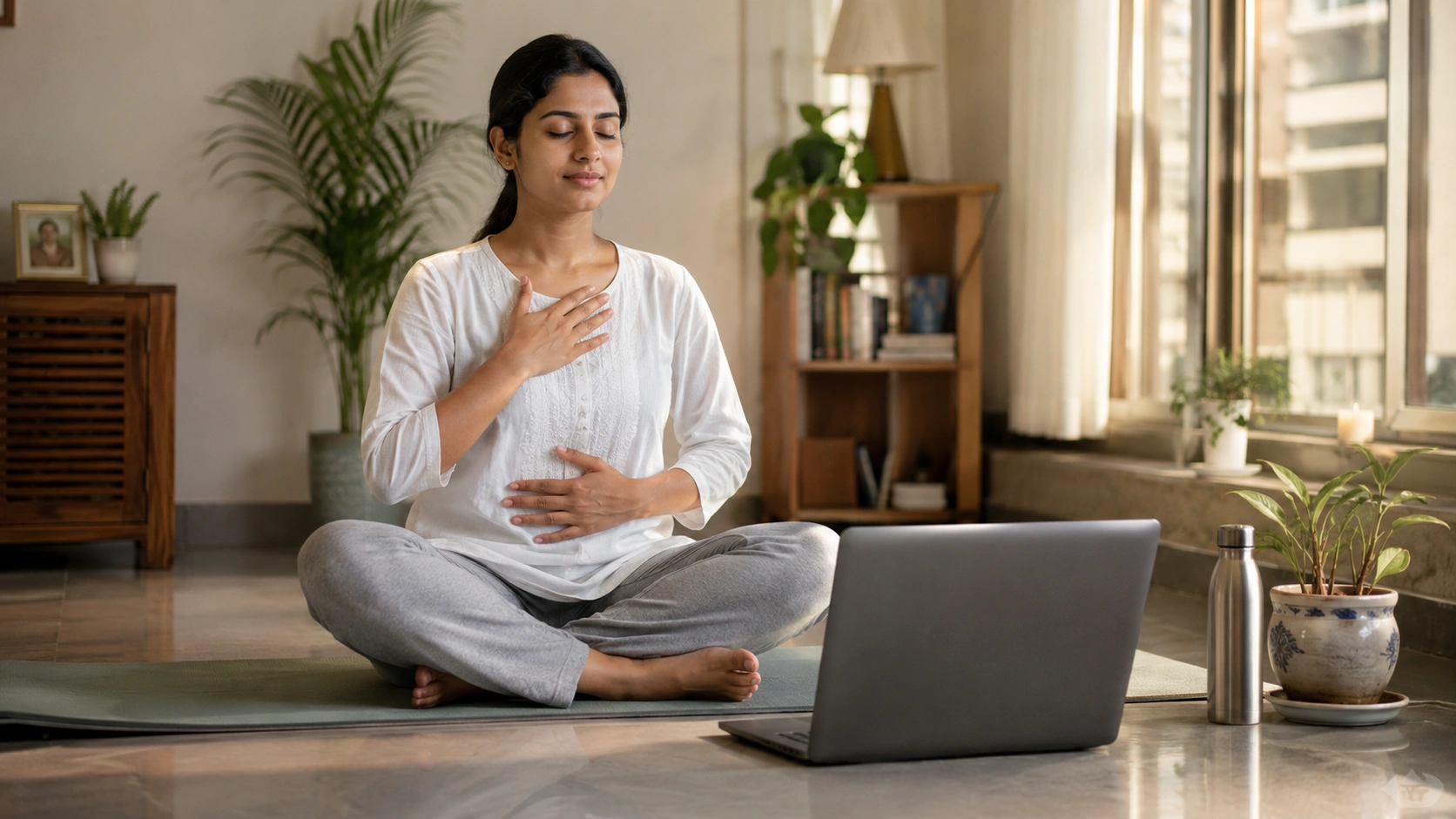
Pranayama: The Ancient Root of Conscious Breathing
Long before modern science validated the power of the breath, ancient Indian sages mastered it through the practice of Pranayama, the science of channelling your vital life force (Prana) through breath regulation (Ayama). Pranayama is not just mechanical breathing; it is the conscious expansion and regulation of your life force.
The core insight remains simple: a stable breath creates a stable mind. Indian sages recognized that the mind and the breath are mirrors of one another.
Stress Relief Meditation: a mental reset button
Every difficult experience leaves an imprint on how we react to the world. When stress strikes, our minds automatically race backward to old hurts or forward into future anxieties.
Using conscious breathwork as a stress relief meditation breaks this loop. The moment you bring awareness to your inhale, you pull your mind out of the unchangeable past and into the absolute safety of the present.
The Science of the Pause: What Happens When You Breathe Deeply When stress strikes, sympathetic nervous system triggers the “fight-or-flight” mode – racing heart, tense muscles, and a surge of cortisol. While designed for survival, this response impairs clear thinking.
Slow, deliberate breaths pull the emergency brake on the sympathetic system and activate the parasympathetic nervous system (the “rest-and-digest” mode).
Physiological Impact of Deep Conscious Breathing:
Deep conscious breathing initiates a cascading relaxation response that directly alters your biology to transition the body from stress to safety.
- Brain Safety Signal: Rhythmic inhalations signal your brain’s emotional alarm system that you are completely safe.
- Hormonal Balance: Cortisol levels drop as safety signals take over. Cardiovascular Calm: Heart rate slows, steadying your pulse and lowering blood pressure.
- Physical Release: Oxygen flows efficiently to muscles, melting away built-up tension throughout the body.
Emotional Balance: The Transformative Power of Conscious Breathing Practicing conscious breathing does not magically alter the external world, may not change the circumstances around you, but it can transform the way you experience and respond to them. Cultivating emotional balance through breathwork gives you the space you need to navigate difficult moments:
- From Reaction to Response: Creates a pause between stimulus and response, letting you act thoughtfully instead of snapping in anger or panic.
- Building Emotional Resilience: Helps you establish lasting emotional balance so you can view difficult emotions as temporary clouds passing through, rewiring your brain to bounce back faster.
- Clarity in the Chaos: Oxygenates the brain during a crisis, clearing mental fog so you can prioritize and decide logically.
“Pause the reaction. Breathe into your transformation.”
The Multi-System Upgrade: How Breathwork Rewires Your Body and Mind Health experts have revealed just how profoundly conscious breathing shapes our overall well-being. A growing body of research suggests that stepping out of automatic breathing unlocks a cascade of whole-body benefits-
- Mental: Sharpens focus, improves concentration and elevates overall mood. Physical: Enhances respiratory function, accelerates metabolism, eases digestion and promotes deeper sleep.
- Cellular: Shifts internal chemistry to reduce harmful free radicals and lower systemic stress.
Breathe Anytime, Anywhere: The Ultimate Flexible Self-Care
Conscious breathing serves as a highly adaptable and accessible tool for personal wellness. It does not require any equipment and fits seamlessly into your daily routine whenever you need a quick reset or a moment of calm to
- Wind down before sleep.
- Transition out of a long workday.
- Centre your mind before yoga, exercise or meditation.
- Reset during a busy afternoon at your desk.
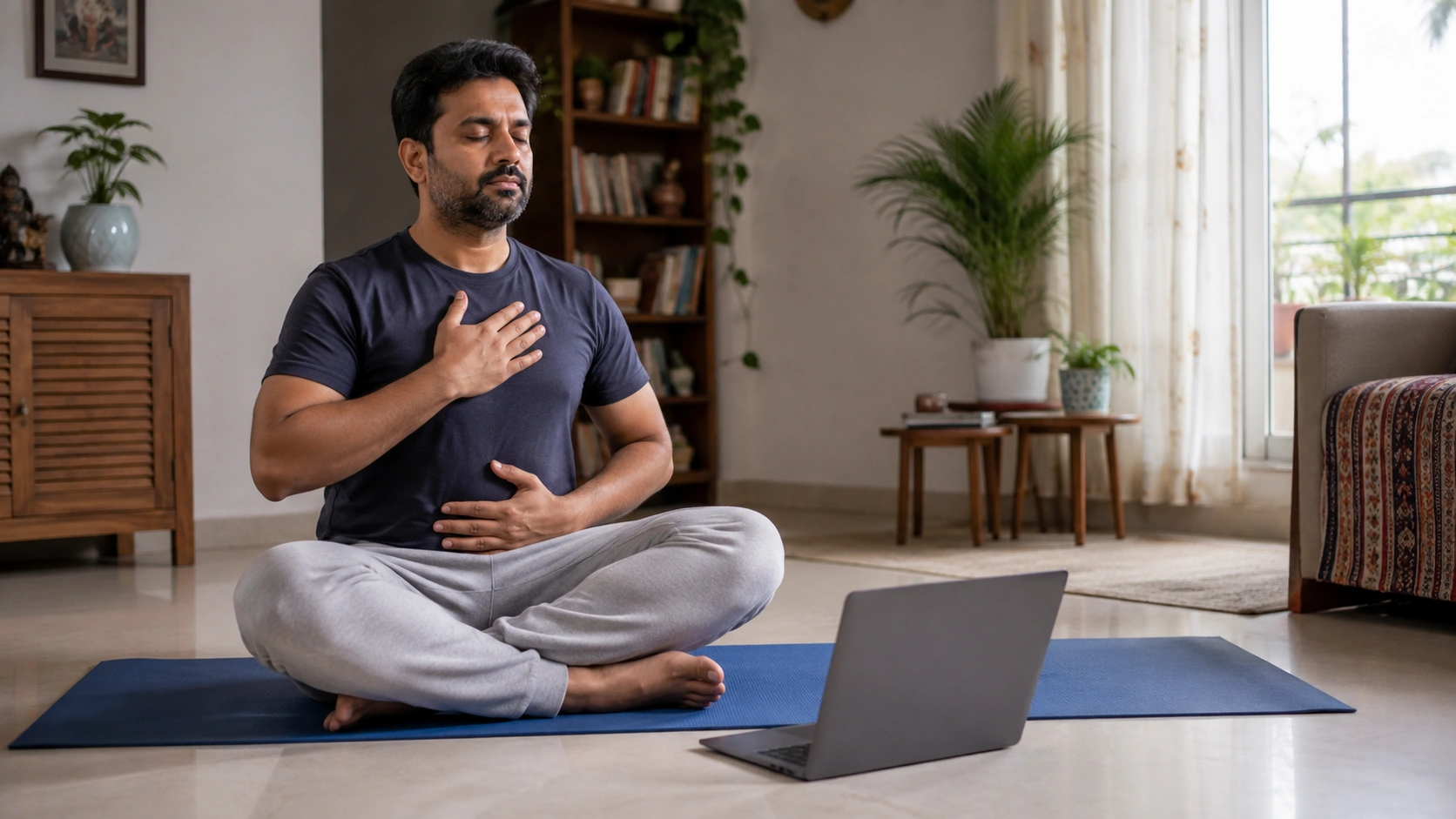
Consistency Builds Calm
While the method is simple, it does take regular practice to develop the skill of conscious breathing. Just like training a muscle, your brain and body need consistent
repetition to turn intentional deep breathing into an automatic reflex during stressful moments.
By dedicating even two minutes every day to this habit, you build the mental muscle memory needed to access instant calm whenever life gets overwhelming. Over time, conscious breathing won’t make life’s challenges vanish – it will ensure you move through them with inner stability and emotional balance, without being carried away by every wave.
“Pause. Breathe. Reconnect. Begin this moment and make conscious breathing a daily practice for lasting calm.”
Conclusion
Through the daily practice of breathing meditation, you learn the art of conscious breathing to move from reaction to response; paired with stress relief meditation, this builds the clarity in chaos necessary for deep emotional balance to navigate daily life while building long term resilience to face challenges for the future.
Our breath is a gift – always present, always within reach. A difficult day is just a single chapter, not the whole story.
Your past shaped your history, but your breath shapes your destiny. Every inhale is a fresh chance to invite intention; every exhale is an opportunity to let go of the chaos.
Ready to build your calm? Start your 2-minute daily breathing practice today and take control of your day, one breath at a time.
Try It Right Now: The 60-Second Reset
Before you scroll away, take one minute to anchor yourself and clear your mind.
1. Get comfortable. Sit upright. Drop your shoulders, unclenching your jaw. Softly close your eyes.
2. Inhale slowly through your nose. Feel your stomach expand as your lungs fill. 3. Hold your breath for a count of 4 (1… 2… 3… 4). Gently scan your body for any lingering tension.
4. Exhale completely through your mouth for a count of 2 (1… 2). Let your chest sink and feel the weight lift off your body.
5. Repeat Once More. Take one more inhale, hold for 4, and let it all go with a long, smooth exhale.
6. Return to your natural breathing rate. Notice the quiet space you’ve created, open your eyes, and carry that balance into the rest of your day.
Your peace is always just one breath away.
Takeaway
Conscious breathing won’t erase life’s challenges, but it will transform how you move through them – with stability, clarity and resilience.