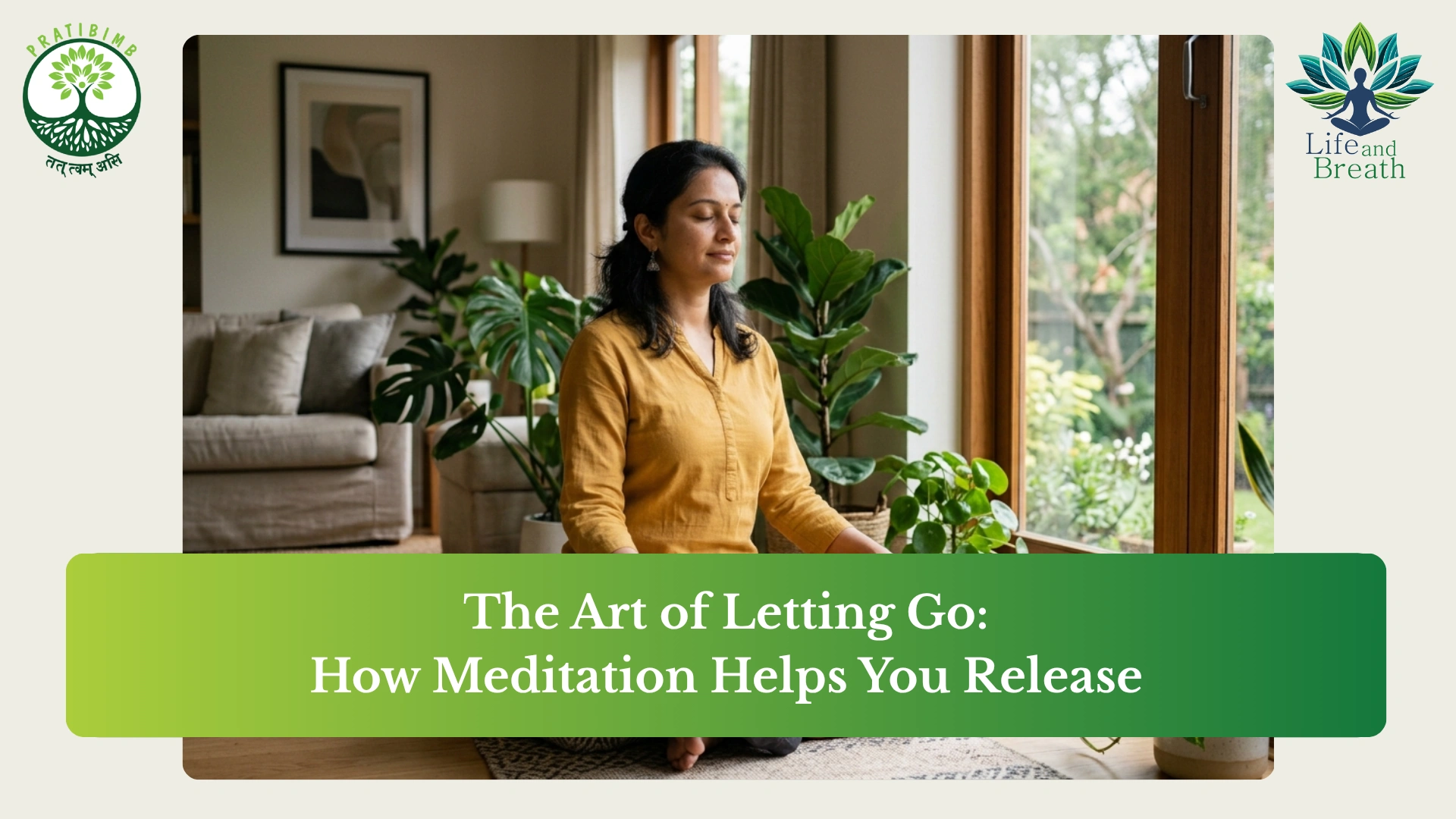
Much of our stress does not come from what is happening right now. It comes from what we fear might happen, what we wish had happened differently, or what we are trying desperately to control.
We want certainty—about our health, relationships, work, family and future. When life cannot provide that certainty, the mind tries to create it through worry and control.
Meditation teaches us another way.
Stress Is Often the Mind Continuing the Story
Something unpleasant may happen for five minutes, but we can carry it for five hours.
Why did that happen? What if it gets worse? What should I have done differently?
The event is over, yet the body remains tense because the mind continues to experience it.
Meditation helps us recognize the difference between what is actually happening and the story our mind is creating around it.
You Are Not Every Thought You Have: The way to emotional healing
During meditation, thoughts constantly appear. Instead of fighting them or following them, we simply notice them. This is the way to emotional healing.
A thought such as:
Something might go wrong.
gradually becomes:
I notice that I’m worried something might go wrong.
That tiny distance matters.
You begin to understand that a thought can exist without requiring a reaction.
Fear may arise without controlling your behaviour. Anxiety may be present without becoming your entire experience.
Fear Lives Mostly in the Future
Much of our everyday fear is anticipatory:
What if I fail? What if I lose something? What if things don’t go according to plan?
Meditation repeatedly brings us back from the imagined future to the present—to this breath, this sensation, this moment.
And frequently we discover:
Right now, I am okay.
Tomorrow may still contain difficulties. But we don’t have to experience tomorrow’s possible suffering today.
Control Is Often an Attempt to Escape Uncertainty: Meditation for letting go
We sometimes believe that if we plan carefully enough, worry enough or manage everyone around us, we can guarantee the outcome we want.
But there is an important difference between influence and control.
We can prepare, work hard and make good decisions. We cannot determine every outcome.
Meditation helps us become more comfortable with that uncertainty.
The principle becomes simple:
Act where you have influence. Accept where you do not. The meditation for letting go.
This isn’t passivity. It prevents us from wasting emotional energy fighting circumstances we cannot change.
The Practice of Letting Go: Breathwork Meditation
Even the breath teaches this.
We breathe in.
Then we let go.
Another breath comes.
We let go again.
Life works similarly. Experiences, successes, disappointments and difficulties come and go. Meditation teaches us to experience them without desperately holding onto some or resisting others.
It also teaches us not to fight uncomfortable emotions.
Instead of “I shouldn’t feel anxious,” we can simply recognize:
“Anxiety is here.”
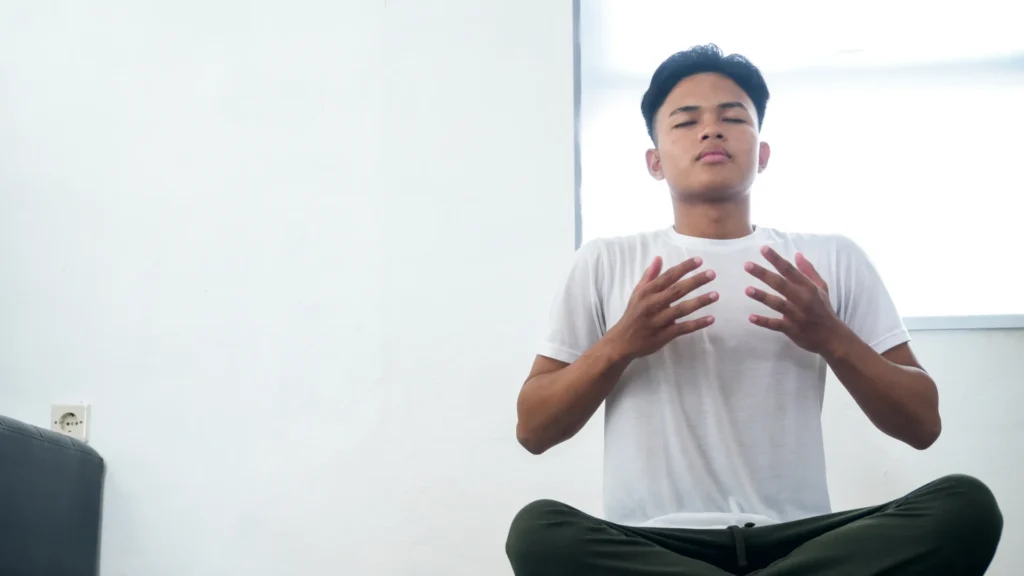
We breathe and observe it. Breathwork meditation.
Slowly we discover something powerful:
I can feel fear without becoming fear.
Responsibility Without Control
Letting go does not mean becoming careless.
We remain responsible for our effort, preparation, decisions and actions.
But we don’t have to carry responsibility for everything that happens afterward.
Do what you can. Then release what you cannot.
This distinction can remove an enormous amount of unnecessary stress.
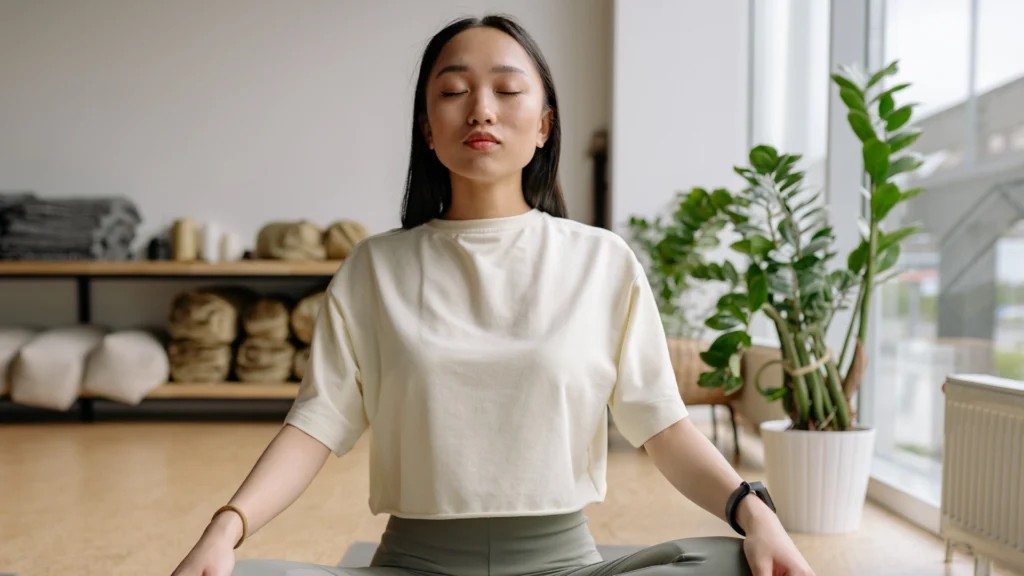
A Simple practice of Mindfulness Meditation
Sit comfortably and bring your attention to your breathing.
Soon your mind will wander—to work, family, a regret or something you’re afraid might happen.
Simply notice:
Thinking.
Then return to your breath.
Don’t fight the thought. Don’t judge yourself for having it. Just return.
Every return is a small exercise in letting go.
Over time, this ability follows you into everyday life. Something goes wrong and, instead of immediately reacting, you notice yourself becoming tense. You pause and ask:
What can I actually do about this right now?
If there is something to do, do it.
If there isn’t, let it be.
Peace Doesn’t Require Everything to Be Under Control
We often tell ourselves:
Once everything is sorted out, I’ll relax.
But life is rarely completely sorted out.
If peace depends upon everything going according to plan, our peace will always be fragile.
Meditation offers a different possibility.
Perhaps peace doesn’t come from finally getting life under control. Perhaps it comes from realizing that we don’t need to.
We can plan without obsessing, care without clinging, prepare without constantly predicting, and act without demanding a particular outcome.
The purpose of meditation isn’t to create a life where nothing disturbs us.
It is to become less easily disturbed by everything life brings.